Random posting isn't a free advertising strategy. Before adding another social content calendar, claim the places where customers already look for your business, compare providers, or check whether you're legitimate. A complete listing with accurate hours and a working contact method is more useful than an abandoned account full of promotions.
For a free advertising business plan, start with profiles, listings, and pages you can claim and maintain. These give you control over your information, not guaranteed distribution. Some capture existing demand; others help a prospect feel comfortable contacting you after a referral.
Free means no media placement fee, not no work. Verification, photography, review responses, product data, and follow-up still require someone's attention. The free lead tools recommended by HomeProBadge can complement that foundation, but tools won't fix an unanswered phone.
Jump to: Google, Nextdoor, Bing, Yelp, LinkedIn, Facebook and Instagram, Merchant Center, or turning listings into inquiries.
Table of Contents
1. Google Business Profile
Google Business Profile is the strongest starting point here for an eligible local or service-area business. It provides a free presence on Google Search and Maps, where customers can find contact details, hours, photos, and service information.
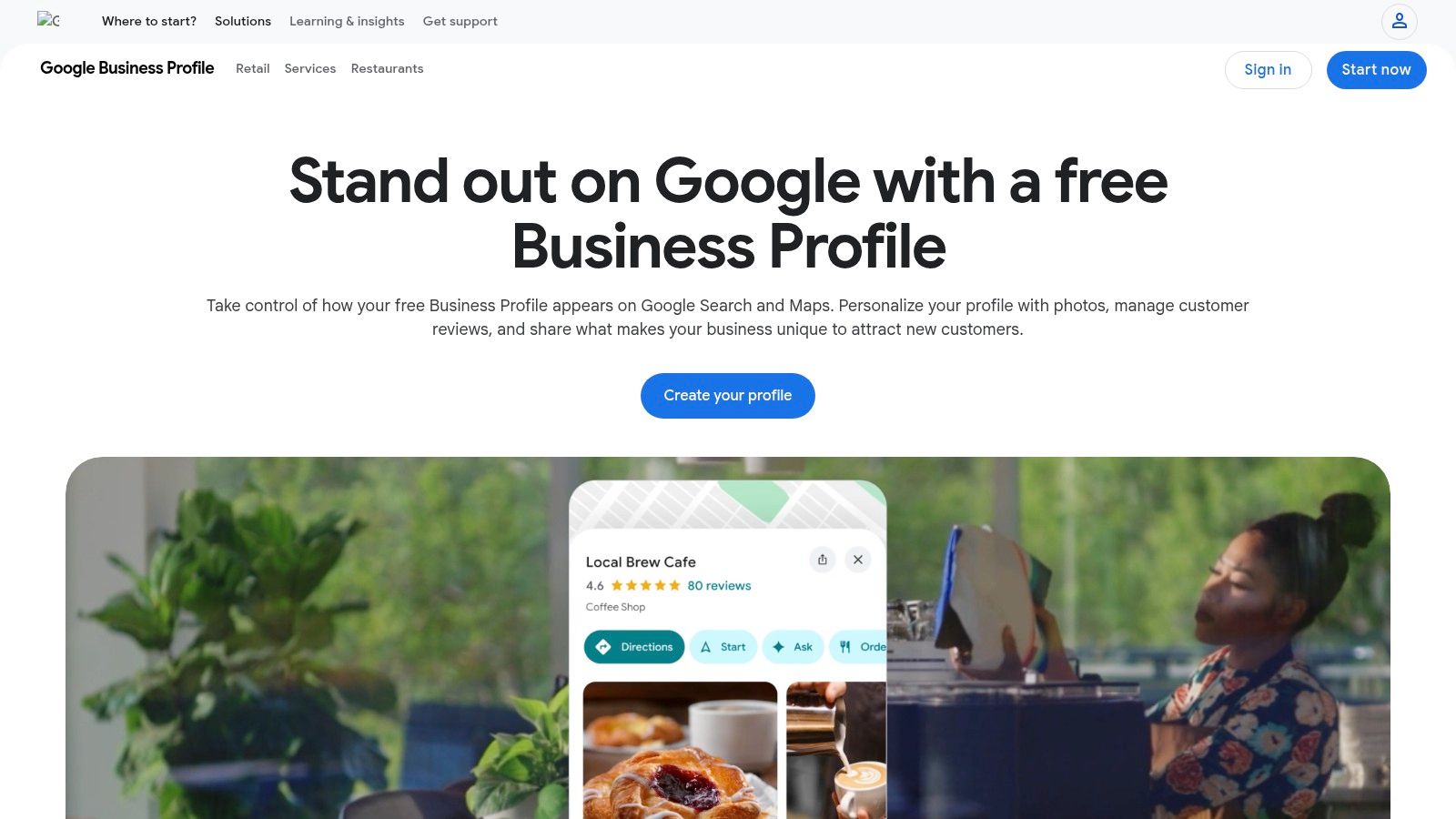
The practical advantage is proximity to a service search. A homeowner looking for a plumber needs coverage information and a clear contact option, not a stream of general motivational posts.
Google identifies relevance, distance, and prominence as the main local ranking factors. Its local ranking guidance recommends complete information and explains that reviews and positive ratings can help local ranking. That doesn't mean a complete profile guarantees placement.
Build for contact, not just visibility
- Complete the essentials: Check your business category, services, contact details, ordinary hours, and holiday hours.
- Show useful evidence: Add current photos that accurately represent your premises, team, or work.
- Maintain the profile: Respond to reviews, publish relevant updates, and examine available customer-interaction insights.
The trade-off: online-only businesses may not qualify, and ongoing accuracy requires attention. Don't create a misleading location to obtain a listing.
Practical rule: A profile interaction is a signal of interest, not proof of a qualified lead.
Record which calls and inquiries become suitable opportunities. Keep that reporting separate from paid campaigns, and use this explanation of what advertising on Google really costs when deciding whether to add paid reach.
2. Nextdoor Business Page
Neighborhood relevance is the reason to consider Nextdoor Business. Its free business page gives nearby residents a place to check your information, see updates, and contact you.
For home services, clinics, and professional practices serving defined areas, that context can be useful. The limitation is equally local: a page won't produce much value if your intended customers aren't active in those neighborhoods.

Treat it as a neighborhood presence
A page supports business details, free posts, messaging, and neighbor recommendations known as Faves. Use those features to answer practical questions about your coverage, availability, and services rather than repeating a broad sales pitch.
For example, a home-service business could explain what customers should prepare before an appointment. A professional practice could clarify which services it provides locally without discussing confidential client matters.
- Best fit: Businesses whose customer base corresponds closely to identifiable neighborhoods.
- Main benefit: A place for local word of mouth and business information to sit together.
- Main cost: Someone must write relevant updates and respond to neighbors.
- Important limit: A free page doesn't guarantee exposure, and paid advertising is separate.
Avoid treating every neighborhood conversation as permission to promote. Answer the actual question, identify your connection to the business, and respect the community's rules.
Connect the page to your broader small-business SEO and GEO starting plan. Keep service descriptions and coverage consistent so a resident who checks your website encounters the same business they saw on Nextdoor.
3. Bing Places for Business
Bing Places is a coverage tool, not a content-production commitment. Through Bing Places for Business, businesses can add or claim a free listing and correct the information customers find on Bing.
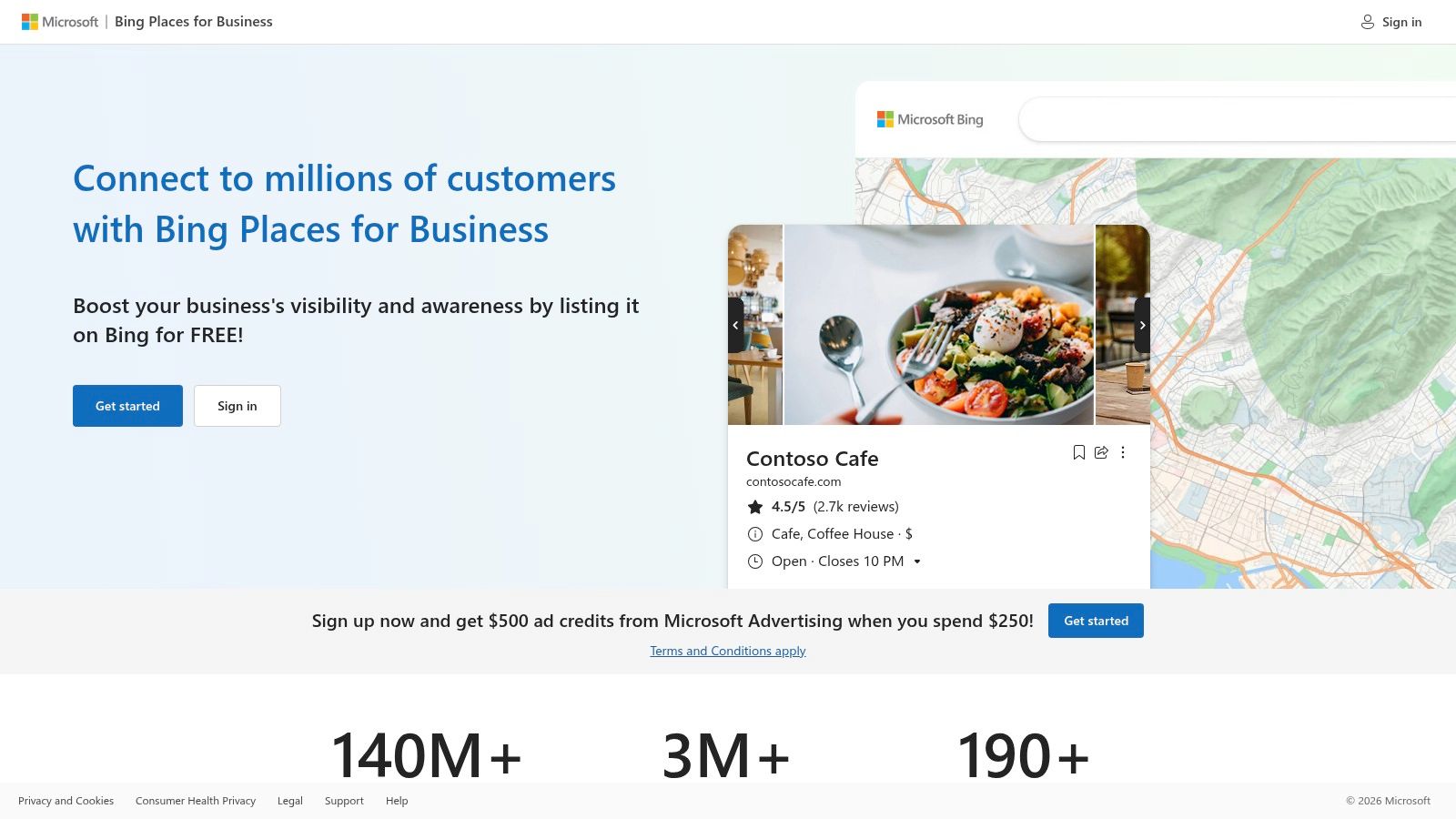
That makes it a practical complement to Google Business Profile. Businesses can supply hours, photos, service details, and contact information without building another social publishing operation.
Prioritize accuracy over activity
Start by checking whether a listing already exists. Claim or correct it rather than assuming you need a new profile, then complete the required verification.
- For storefronts: Confirm that the location, contact information, and opening hours describe the customer-facing operation accurately.
- For service-area businesses: Check whether your business type qualifies and use the appropriate location settings.
- For multiple locations: Evaluate bulk upload options, while checking each location's details individually.
The upside is additional search coverage without a placement fee. The downside is that you're reaching Bing users, and the listing may not produce meaningful inquiries in your particular market.
A free listing is worth maintaining when the information helps customers. It doesn't need to become another publishing channel.
Review the listing whenever hours, services, or contact methods change. Keep login ownership documented so an employee departure doesn't prevent future corrections.
For channel planning, compare its maintenance requirements with the options in online advertising platforms to know. Bing Places belongs in the basic information layer; it isn't a substitute for a campaign designed to create additional demand.
4. Yelp for Business
A customer comparing providers needs more than a name and phone number. A claimed Yelp for Business page lets you present specialties, photos, hours, contact details, and responses to customer feedback in a dedicated local-business profile.

Yelp fits the evaluation stage. Someone may use the page to decide whether your services match their needs, even if they first heard about you elsewhere. Its usefulness still depends on your industry and location.
Separate profile management from paid promotion
The free claimed page supports profile management and customer communication. Advertising and certain upgraded features are separate paid options, so don't confuse claiming your page with purchasing prominent placement.
Use available page activity information, including calls and website clicks, as directional evidence. Check actual inquiries before deciding whether the profile deserves more attention.
- What works: Clear specialties, representative photos, accurate hours, and thoughtful responses.
- What takes effort: Monitoring messages and reviews without becoming defensive.
- What isn't promised: Prominent placement or a dependable volume of suitable customers.
Review handling deserves particular care for clinics and law firms. Keep replies general, avoid exposing private information, and move sensitive conversations to an appropriate private channel.
Unpaid promotion also needs a compliance review when benefits or incentives are involved. The FTC's consumer reviews and testimonials guidance addresses material connections and disclosure obligations. Don't assume that a promotion falls outside advertising rules merely because you didn't pay for distribution, and check platform policies before requesting reviews.
5. LinkedIn Pages
For a consultancy or professional practice, credible expertise matters more than neighborhood proximity. LinkedIn Pages provide a free company presence where prospects can understand the business and examine its professional content.
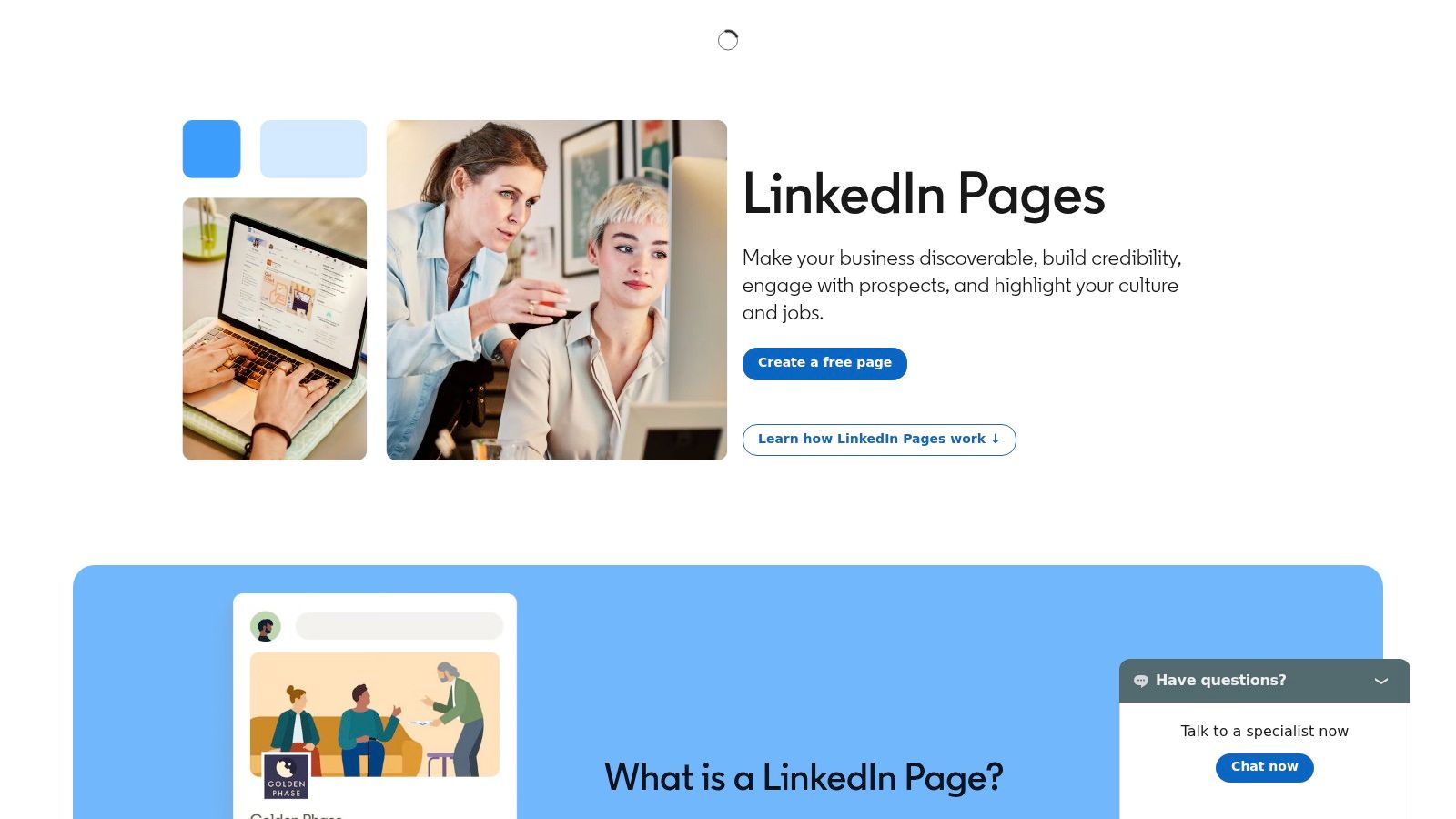
A Company Page supports a description, business information, and posts containing updates, articles, images, or video. Page analytics help you examine visits and post performance; free Service Pages can also support messages and proposal requests.
Publish evidence of how you think
A useful professional post answers a question a prospective client might ask. An estate-planning practice could explain what information to organize before a consultation, while a consultancy could outline how it approaches a defined operational problem.
Case-study-style content should describe documented work and respect client permissions. If you can't substantiate a result, explain the process instead of implying a performance claim.
Editorial test: Would a prospective client learn something useful if they never contacted the business?
The advantage is a professional setting for demonstrating expertise and supporting organic networking. The cost is the sustained effort required to produce useful material and participate in relevant conversations. Organic reach and follower growth aren't guaranteed, and enhanced branding or advertising may cost extra.
For attorneys, apply the same accuracy standard to company updates as to website copy. The ABA commentary on Model Rule 7.1 explains that technically true statements can still mislead through unsupported implications. Verify applicable jurisdictional rules before publishing claims about outcomes, fees, or superiority.
6. Facebook and Instagram Business Profiles
Facebook and Instagram are useful when customers benefit from seeing the business in action. Their free business pages and profiles support photos, video, updates, and conversations, while Meta's business tools include Meta Business Suite for managing activity.
Unlike a search listing, these channels require a stronger ongoing content commitment. A completed profile establishes your presence, but it doesn't guarantee that prospective customers will see your posts.
Choose content you can maintain
Educational clips, product demonstrations, customer updates, and explanations of your process give people something concrete to evaluate. Use customer stories only with appropriate permission, and avoid presenting exceptional results as a promise.
- For visual businesses: Show products, premises, or work accurately rather than relying on generic stock imagery.
- For professional services: Explain common questions in plain language and provide a clear route to further information.
- For community engagement: Monitor comments and messages instead of treating publication as the end of the task.
The benefit is flexibility across visual content and customer interaction. The drawback is the production and moderation workload, particularly when organic reach fluctuates. Paid promotion and some enhanced business features remain optional costs.
Use these Facebook and Instagram management practices to connect content, page upkeep, and audience engagement. The guidance on how to promote your business page in 2026 can support that planning.
Measure suitable inquiries alongside engagement. A popular post isn't automatically a useful source of customers, and a quiet profile can still help someone verify a referral.
7. Google Merchant Center Free Listings
Merchant Center is for product discovery, not general service promotion. Google Merchant Center offers free product listings for eligible retailers and ecommerce businesses, with eligible products potentially appearing across Google Search, Maps, YouTube, Images, and the Shopping tab.
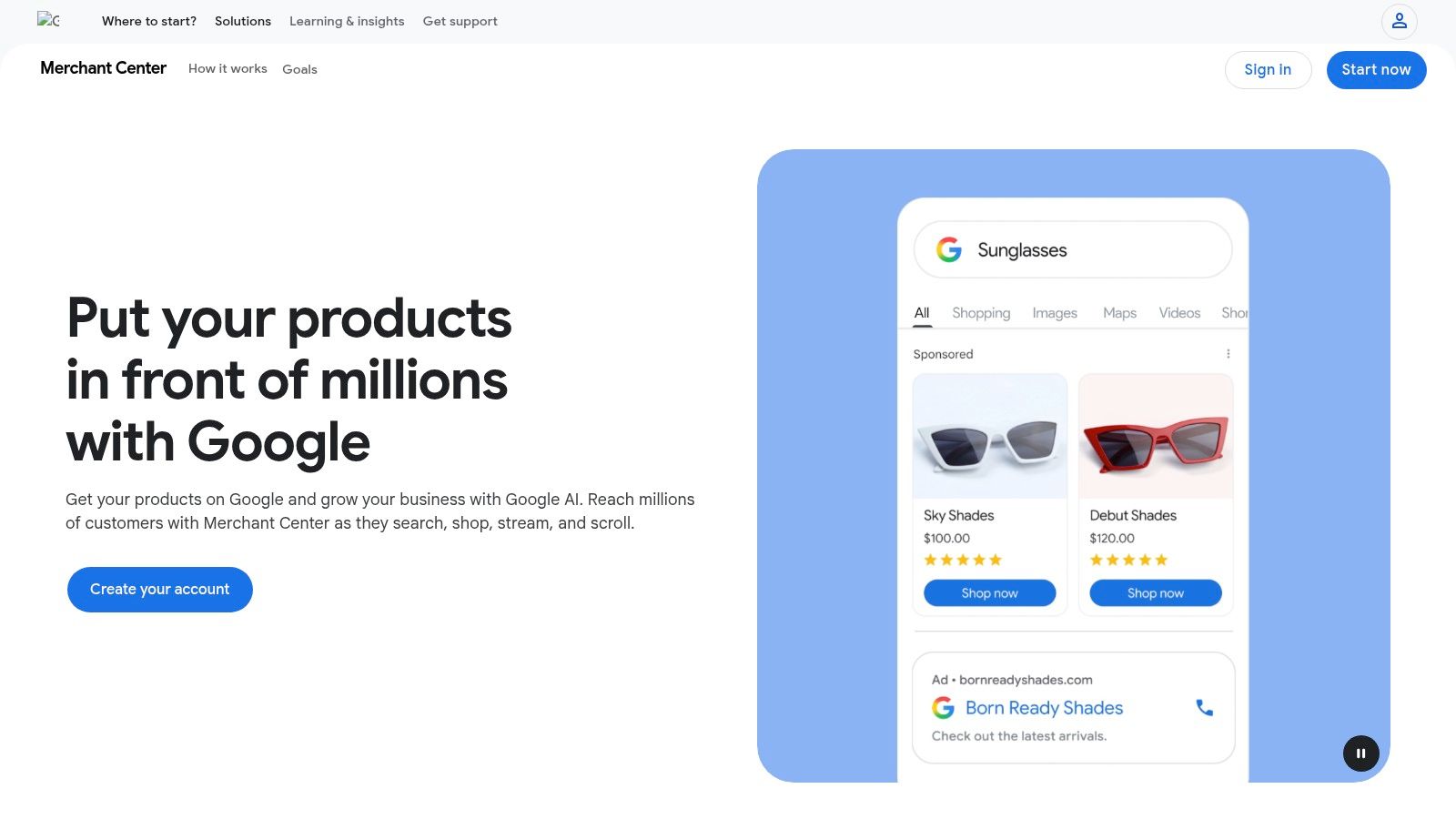
An agency or law practice shouldn't treat it as another directory to claim. A retailer with accurate product information and a functioning store has a much clearer use case.
Product data is the ongoing work
Product information can be supplied manually or connected through supported ecommerce platforms. Merchant Center also provides tools for managing that information and examining performance.
- Best fit: Eligible online retailers and local stores with supported product inventory.
- Main advantage: Product discovery without requiring a paid Shopping campaign.
- Main obligation: Accurate product data and compliance with listing requirements.
- Main limitation: Inclusion and placement aren't guaranteed.
The practical challenge is keeping the product listing and purchase destination consistent. Check that the item description, price, availability, and landing page tell the same story rather than treating feed submission as a finished task.
Free listings can complement paid Shopping activity, but they're not paid Shopping ads. Evaluate them separately so you can distinguish product interest from completed purchases.
A discoverable product still needs a convincing offer and a usable purchase path. This guide to improving ecommerce offers, social proof, and targeted traffic connects those decisions. Fix missing information and purchase friction before assuming that additional visibility will solve weak sales.
Free Advertising Platforms: 7-Option Comparison
| Platform | Setup and upkeep 🔄⚡ | Expected impact 📊⭐ | Ideal use | Key advantage 💡 |
|---|---|---|---|---|
| Google Business Profile | Free; requires eligibility, verification, and regular updates and review responses | Can improve local discovery on Google Search and Maps; placement is not guaranteed | Eligible local and service-area businesses | Reaches people actively searching for nearby services |
| Nextdoor Business Page | Free; benefits from regular posts and responses to neighbors | May build neighborhood awareness and recommendations; exposure varies locally | Businesses serving defined neighborhoods | Supports local word of mouth through neighbor recommendations |
| Bing Places for Business | Free; requires claiming or creating and verifying a listing | Extends local search coverage to Bing; inquiry volume varies by market | Local businesses seeking additional search coverage | Adds a listing beyond Google at no cost |
| Yelp for Business | Free profile; requires review monitoring and responses | Helps local customers evaluate providers; prominence is not assured | Consumer-facing local businesses in active Yelp markets | Combines business details, customer feedback, and communication tools |
| LinkedIn Pages | Free; ongoing useful content helps maintain activity | Can support professional credibility and B2B visibility; organic reach is not guaranteed | B2B companies and professional services | Provides a channel for sharing expertise and case studies |
| Facebook and Instagram Business Profiles | Free; regular content creation and moderation require time | Can build awareness and engagement; organic reach may fluctuate | Visual, community-oriented, and consumer-facing businesses | Supports updates, video, and customer interaction across two platforms |
| Google Merchant Center Free Listings | Free; requires accurate product data and policy compliance | Eligible products may appear on Google surfaces; inclusion is not guaranteed | Retailers and ecommerce businesses with eligible products | Offers no-cost product discovery on Google without requiring paid Shopping ads |
Turning Free Listings Into Steady Inquiries
Claim and verify the profiles your business is eligible to use before committing to a demanding posting schedule. Keep a central record of business details, access permissions, service descriptions, and approved imagery. Use it whenever you update a listing.
Then establish a weekly maintenance routine that someone owns. Review messages and customer feedback, correct outdated information, and check whether inquiries reached the right person. Layer organic posting on top of that operational foundation.
- Maintain consistency: Align hours, contact details, service areas, and descriptions across relevant channels.
- Close the response gap: Assign responsibility for messages, reviews, calls, and form submissions.
- Publish selectively: Choose channels where you can contribute useful material without neglecting customer service.
- Track business outcomes: Record source, suitability, appointment status, and eventual revenue where attribution is available.
Don't count every click, call, or direction request as equivalent. Connect profile actions to CRM stages, and distinguish discovery from people already searching for your business by name. Include staff time when judging whether a supposedly free channel is economical.
Treat these listings primarily as demand capture and credibility tools. They help people find or evaluate a business, but they offer limited control over demand creation. Additional directory work or backlink building sites shouldn't distract from accurate information and reliable follow-up.
When you need qualified inquiries beyond uncertain organic reach, a managed service such as SimpleLab Digital can extend the foundation into paid media, SEO, landing pages, and email/SMS nurturing. Keep consent and compliance review inside that process. For commercial email, the FTC's CAN-SPAM compliance guide specifies truthful sender information, accurate subject lines, advertisement identification, a valid postal address, and a functioning opt-out mechanism.
The sensible next step isn't claiming every available profile. It's maintaining the relevant ones, measuring suitable inquiries, and expanding only when you can support the additional work.
SimpleLab Digital offers subscription-based paid media, SEO, content, landing pages, and email/SMS follow-up for small businesses, with particular depth in law firm marketing. Visit SimpleLab Digital to explore modular services or monthly packages that connect your free-listing foundation to qualified inquiries and downstream revenue.