
Your van's parked outside a finished job, you're loading tools, and somewhere across town a homeowner's staring at a flickering panel with a phone in one hand. They aren't reading your about page. In the first ten seconds they're checking four things: do you do this job, do you cover their street, are you licensed, and can they reach you without hunting through menus. If any answer's missing, they tap the next name.
That's how most websites for electricians lose the call. The site lists every service in one paragraph, buries the phone number in a footer, and never says where you work. The work itself never gets a chance.
Discovery now starts well before that call. In a 2026 survey of 2,000 homeowners, 83% started a home-service search online, according to the home services industry statistics compilation. Your site sits at the start of the buying journey, not at the end of it.
This roundup covers 10 providers that build websites for electricians. I judged each one on the pages it includes for real electrical work, how it handles calls and forms, what it publishes about price, and what you still need to confirm before signing. Where a provider shows a clear panel upgrade page, an EV charger page, and a fast emergency path, I say so. Where the price only works if you read the small print, I say that too. For wider context on structuring a site around booked jobs rather than page views, see this website strategy from Growth 4 Trades.
Table of Contents
1. Bay Pulse Marketing
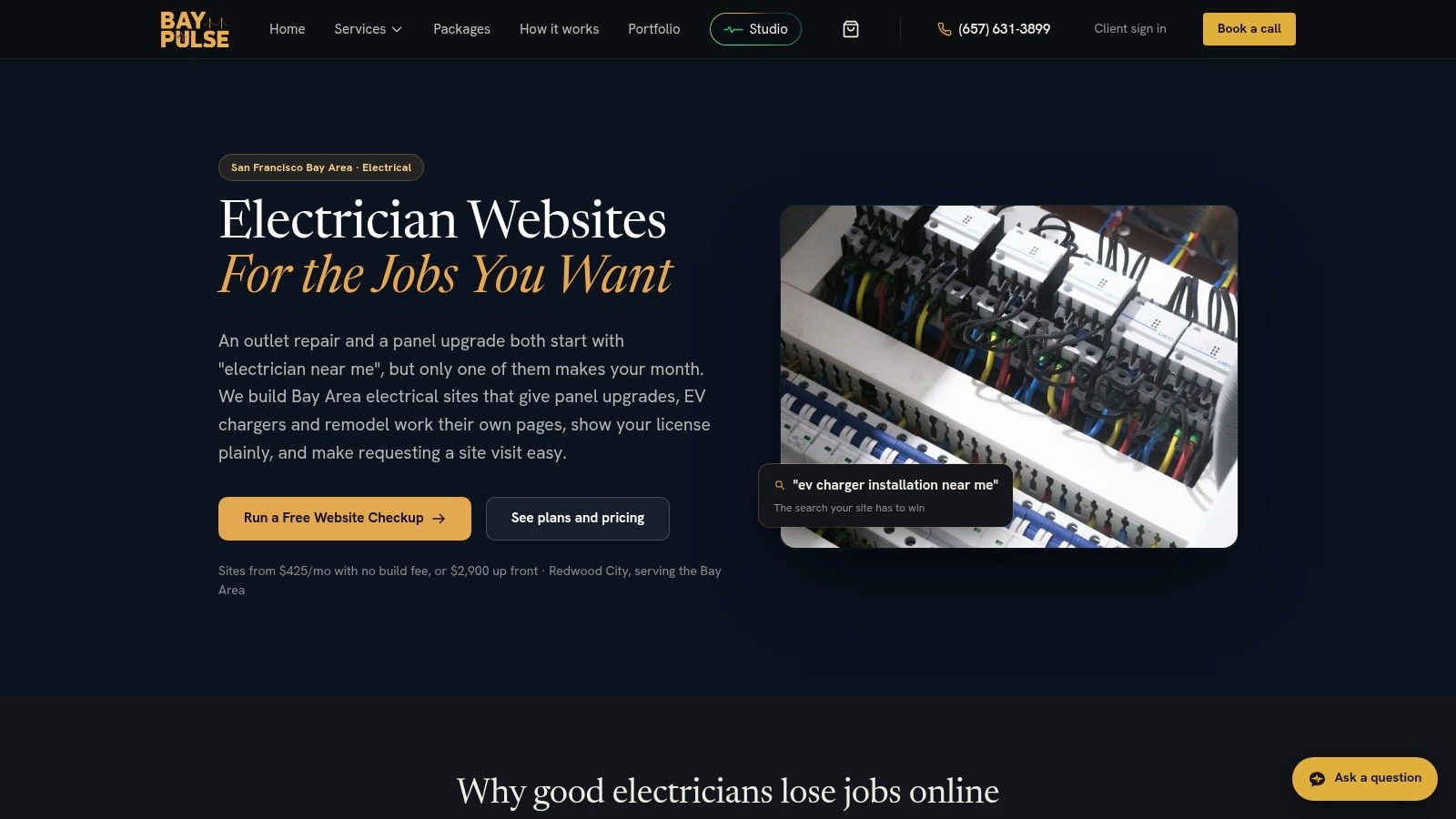
Bay Pulse Marketing builds around the job, not around a generic trades template. You get dedicated pages for panel upgrades, EV charger installations, rewiring, and service calls, plus service-area pages and separate paths for residential and commercial customers. That split matters, because a homeowner with a dead circuit and a property manager pricing tenant work don't ask the same questions.
The practical details get space here. License, permit, and inspection information sits prominently, and contact comes through tap-to-call and site-visit request forms rather than a single contact page. Optional missed-call texting handles the calls you can't answer from a ladder.
What To Check Before Signing
- Published pricing: The provider publishes a $425 per month ongoing option and a $2,900 upfront option that also carries a monthly operating cost, so compare total first-year spend, not the headline.
- Geography: The core offer is aimed at the Bay Area. If you're outside it, confirm availability first.
- Proof: The browsable sites are concepts. They show structure and taste, not live electrician-client results.
A good electrician site answers operational questions, who handles permits, how diagnostic fees work, and when power goes off, before a customer has to call and ask.
That point is where Bay Pulse's structure earns its place. Pages built per service give you room to explain what a panel upgrade involves, how long the shutoff lasts, and what can change an estimate. Publishing those boundaries qualifies leads instead of attracting mismatched ones.
I recommend it if you want service-specific pages shaped around the work you want to sell.
2. Anchor Web Digital
Start with the two things Anchor Web Digital puts in writing: fixed upfront pricing tiers and stated site ownership. You own the finished site. For a contractor who's been burned by a rented website that vanished when payments stopped, that single line can decide the deal.
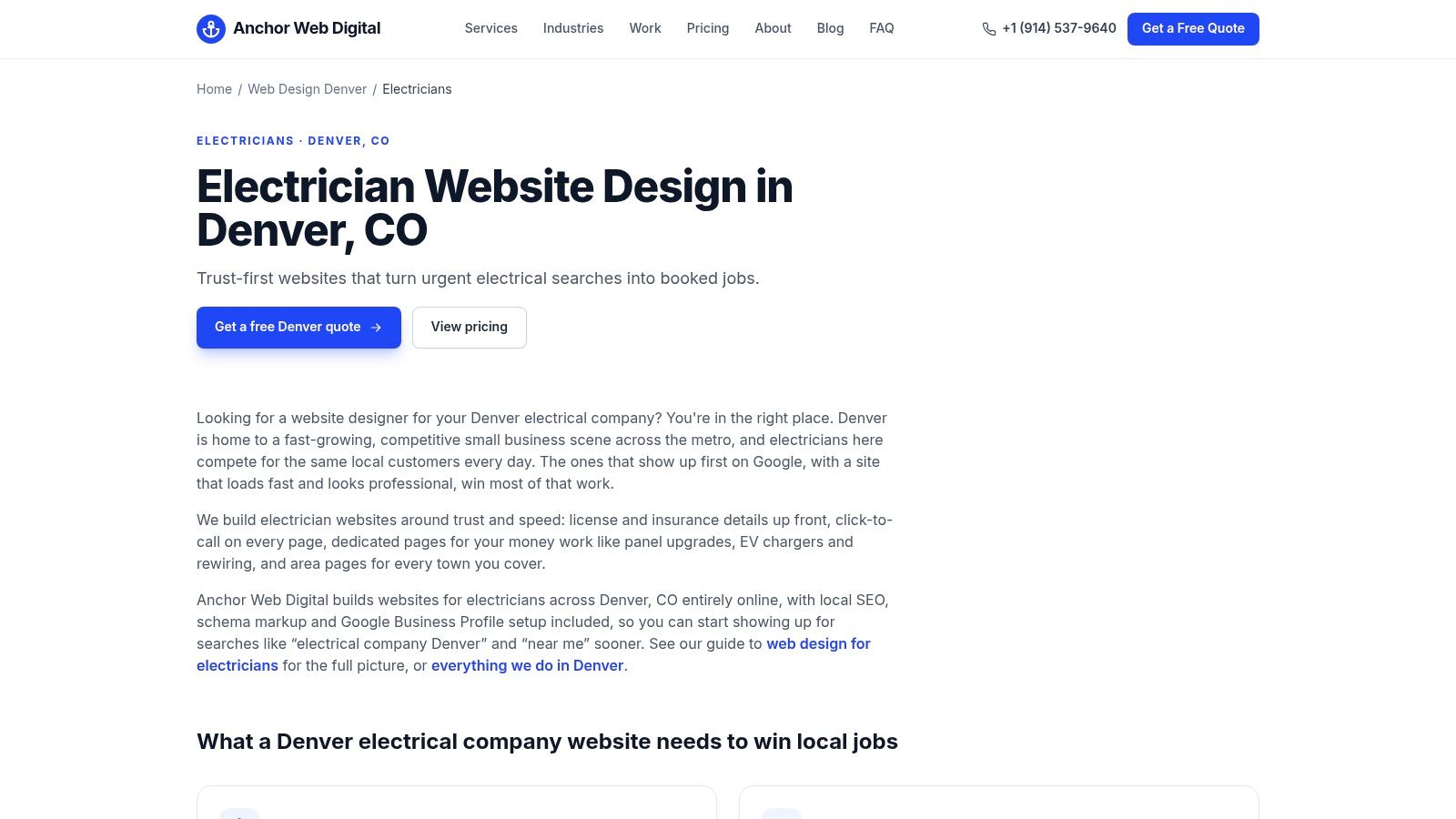
The build itself covers pages for panel upgrades, EV chargers, and rewiring, with local service-area pages and mobile click-to-call. The technical layer includes local SEO, schema markup, and Google Business Profile setup. Schema isn't decoration. Per Google's LocalBusiness structured data documentation, you add the required properties, validate with the Rich Results Test, and keep pages accessible to Google, which gives search systems explicit business details beyond your page copy.
The Trade Offs
Published tiers make initial budgeting straightforward, and other listed U.S. service locations suggest the team works remotely beyond Denver. But the electrician page is location-oriented, so confirm coverage and scope for your market rather than assuming the Denver package transfers unchanged. The entry-level tier may not include enough service and area pages if you run multiple crews across several towns. There's also no independent outcome data on the page, so you're judging promise and structure, not measured lead results.
If you're pairing a full site with one focused campaign page, compare that route against a standalone landing page creation service before paying for pages you don't need yet.
3. Goliath Webs
The pitch is simple: $99 per month, no upfront design fee, no long-term contract. Goliath Webs bundles the parts solo electricians usually forget to maintain. You get website design, hosting, SSL, security monitoring, and backups, plus content updates when you add a service like generators or EV chargers.
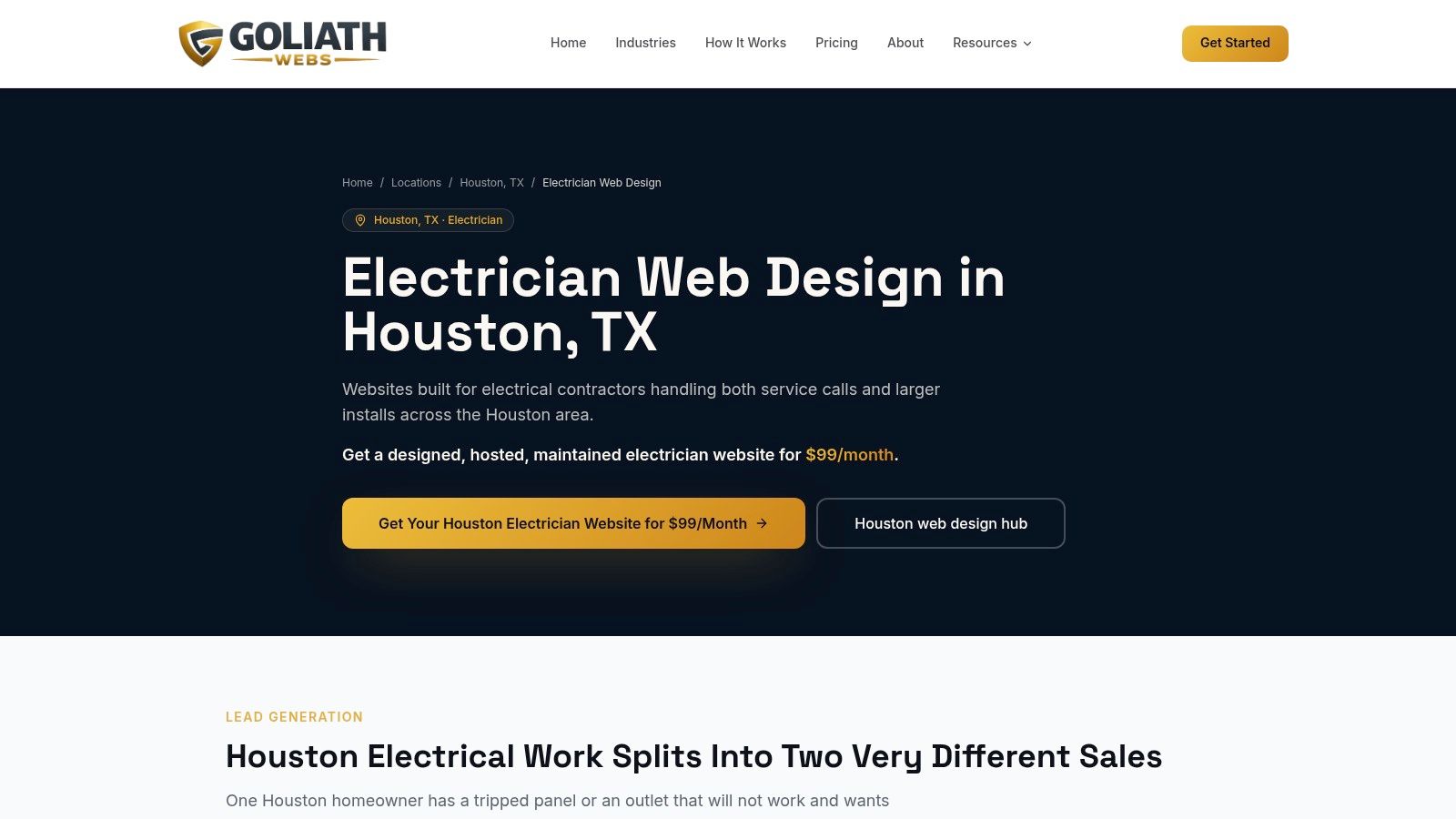
The site is mobile-first with a service request form, and local SEO foundations and metadata are included. Mobile-first is the right default for urgent work. According to Google's mobile site speed playbook, 53% of visitors leave when a page takes longer than three seconds to load. A bundled package only pays off if that bundled design stays lightweight, so test the demo on your own phone, on a real connection, before you sign.
Where The Low Price Ends
- Excluded costs: Advertising budgets, third-party software, and full content marketing aren't in the monthly fee.
- Geography: The published page is framed around Houston. Confirm coverage elsewhere, even though delivery is remote.
- Rankings: The company doesn't promise search rankings. That's honest, but it means visibility growth is your risk to manage.
For background on what separates a page that converts from one that just looks finished, this guide to creating high-conversion landing pages and websites is worth an hour.
I recommend Goliath Webs if you prefer a lower monthly cost with ongoing site care folded in, and you don't need a large multi-location build.
4. Iron Canyon Co
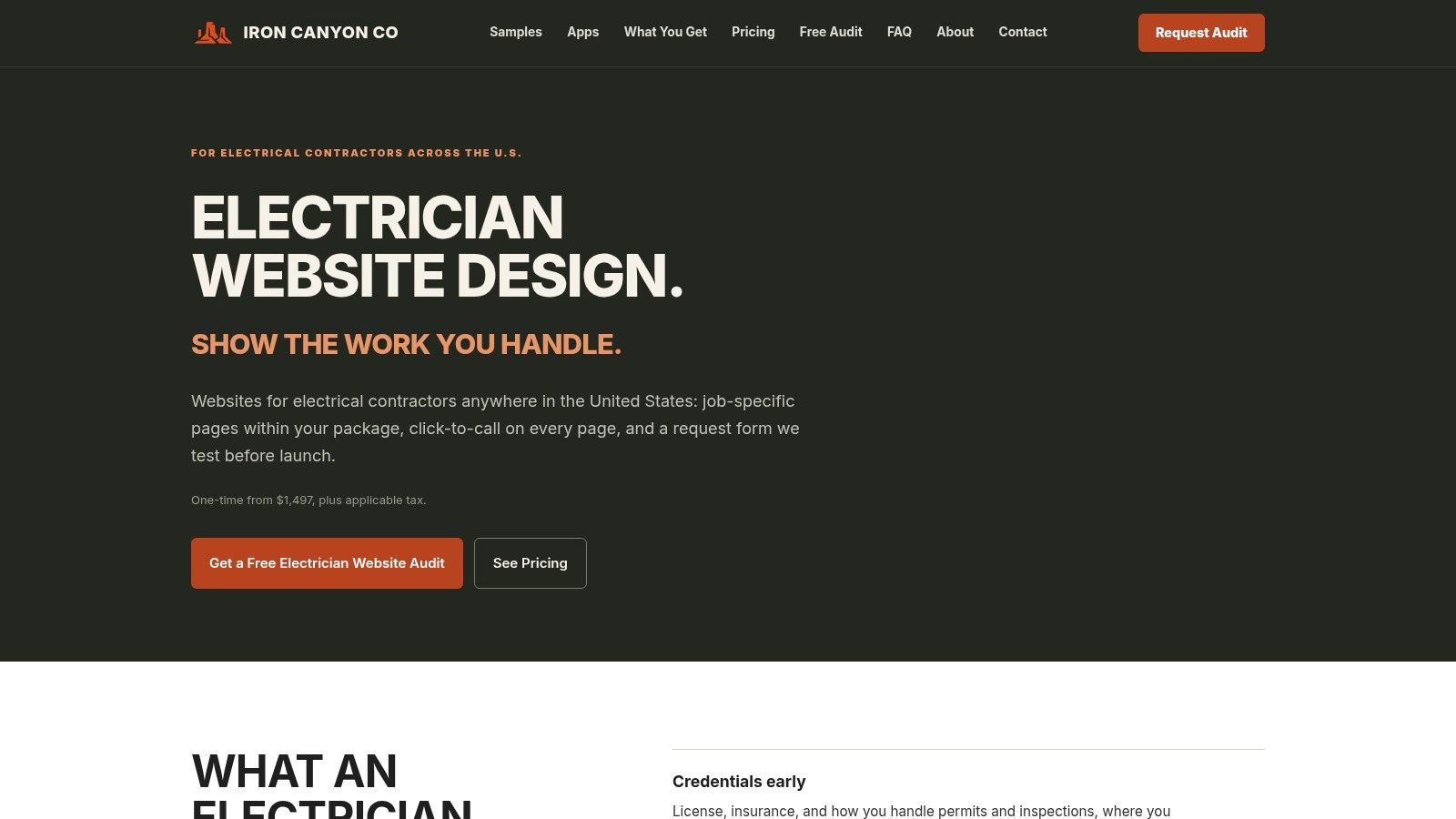
Iron Canyon Co serves contractors across the United States and puts its scope in plain terms: page limits, revision rounds, and what happens at handoff. That clarity is rarer than it should be. You know what the starter package includes before the first call ends.
The pages cover panels, EV chargers, lighting, generators, and repairs. There's deliberate space for credentials, permits, inspection details, reviews, and project photos, which is the proof a homeowner wants before letting someone rewire their house. Contact runs through click-to-call and a request form tested before launch. That last detail matters more than design awards. A form that fails without warning costs you jobs you'd never know you lost.
Questions For The Quote
The one-time starting price is published, but a larger site will cost more, so get the full page count priced. Ask what optional hosting and maintenance cost after launch, and how much copywriting and SEO work is included versus left to you. Page speed should be in that conversation too. Google's Core Web Vitals guidance sets Largest Contentful Paint at 2.5 seconds or less, Interaction to Next Paint below 200 milliseconds, and Cumulative Layout Shift below 0.1. Ask whether the finished site will be measured against those numbers, since review widgets and sticky call buttons are exactly what break them.
Contractors comparing trade marketing approaches can see adjacent examples in this overview of digital marketing for HVAC businesses.
5. JDFWebDesigns
Most providers on this list sell you a website. JDFWebDesigns sells you the follow-up system attached to it. Plans run from a single-page site for solo electricians up to 15-page builds, and even the Starter plan includes missed-call text-back and AI SMS follow-up. If your phone rings while you're in an attic, the lead gets a text instead of silence.
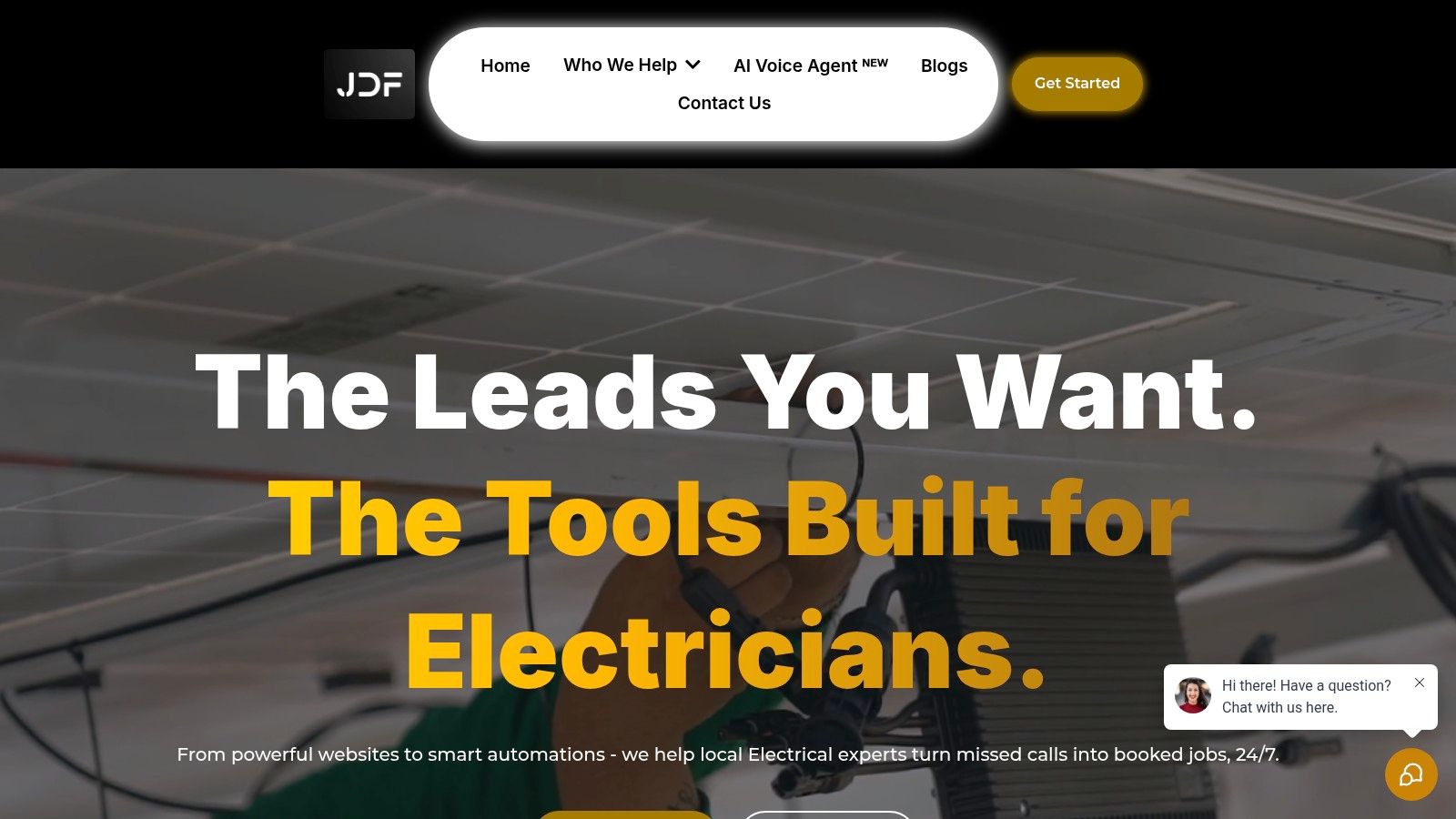
The package also covers Google Business Profile optimization and review automation. Higher tiers add a CRM, booking calendar, email campaigns, and ad support. Published monthly plans make the bundles easier to compare line by line, which I prefer over a quote that only exists after a sales call.
Watch The Bundle Edges
- Setup fee: A setup fee may apply on top of the monthly plan.
- Page limits: A single-page site gets restrictive fast if you offer many services or cover several areas. You'll outgrow it.
- Ad spend: Clarify whether the $549 plan's ad campaign support includes the advertising budget or only the management.
Practical rule: Price the system you'll still want in eighteen months, not the smallest bundle that gets you online this month.
The maintenance burden doesn't disappear because tools are bundled. Whoever you hire, keep a recurring upkeep routine, the discipline in this website maintenance checklist transfers directly to a trade site.
I recommend JDFWebDesigns if missed calls and slow follow-up are costing you more than an outdated design is.
6. Coastline Web
Emergency callers and planned-project customers need different things from the same homepage, and Coastline Web designs for both. Urgent visitors get tap-to-call and text buttons plus an optional emergency banner. Someone pricing a panel upgrade gets dedicated pages for EV chargers and panel upgrades, an estimate form, and time to read.
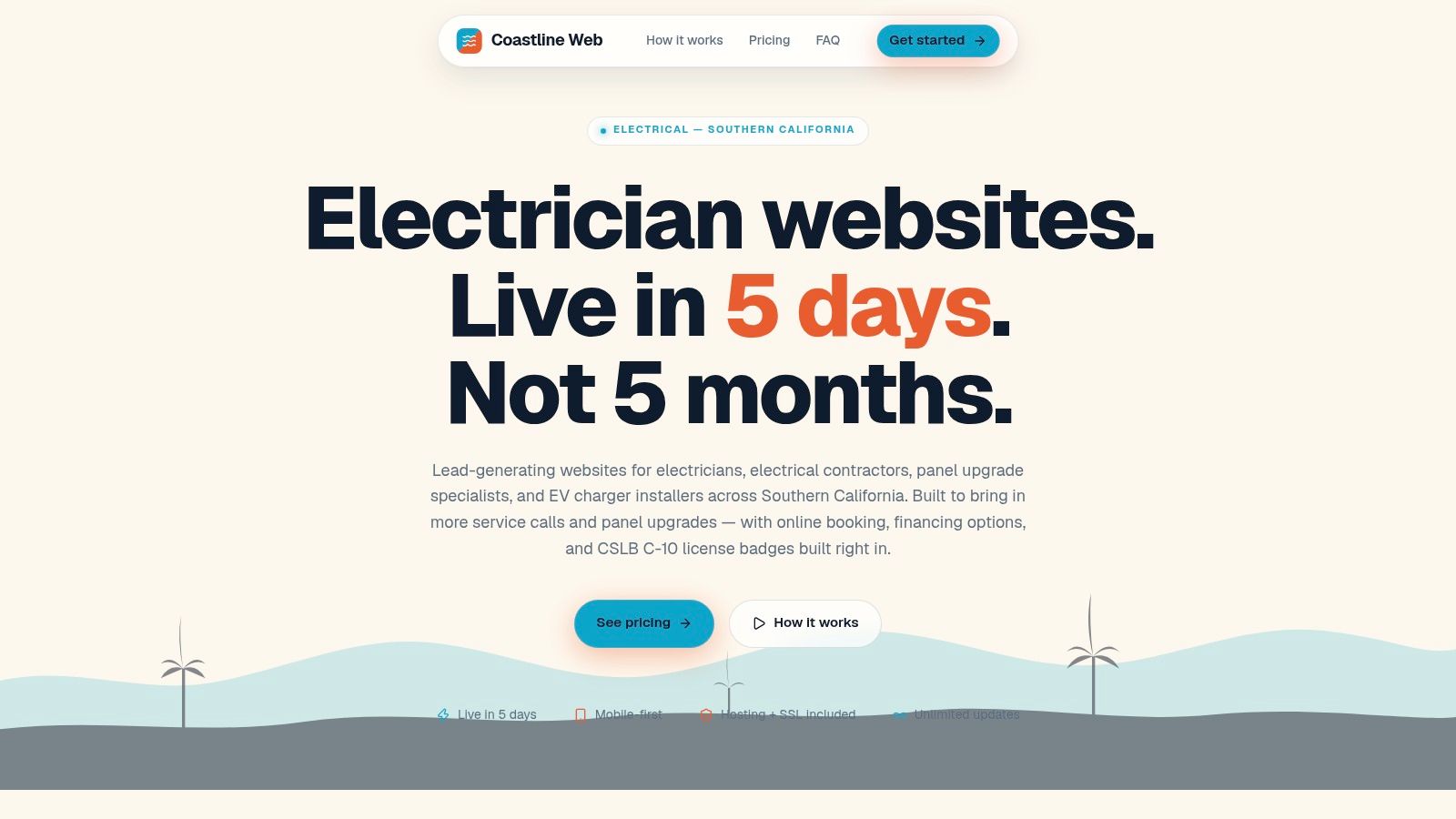
Forms can connect to field-service platforms through optional CRM integrations, so a request lands in the system your office already uses. Reviews and license or certification details sit prominently. That placement is well judged. In the 2026 BrightLocal survey of 1,002 U.S. consumers, 97% read reviews for local businesses and 47% will not use a business with fewer than 20 reviews, as reported in this electrician websites guide citing the BrightLocal survey. Reviews aren't decoration on a service page. They're part of how a visitor decides you're qualified to call.
Pricing Structure
You can choose a monthly service plan or outright purchase. Read both totals carefully. Monthly options carry setup fees, and outright purchase prices exclude hosting and updates, so the cheaper-looking route depends on how long you keep the site. The stated focus is Southern California, so outside that region, confirm fit before spending time on a proposal.
If search work is part of your plan after launch, this primer on how to start SEO on your website and blog content covers the sequencing.
7. Bripe Media
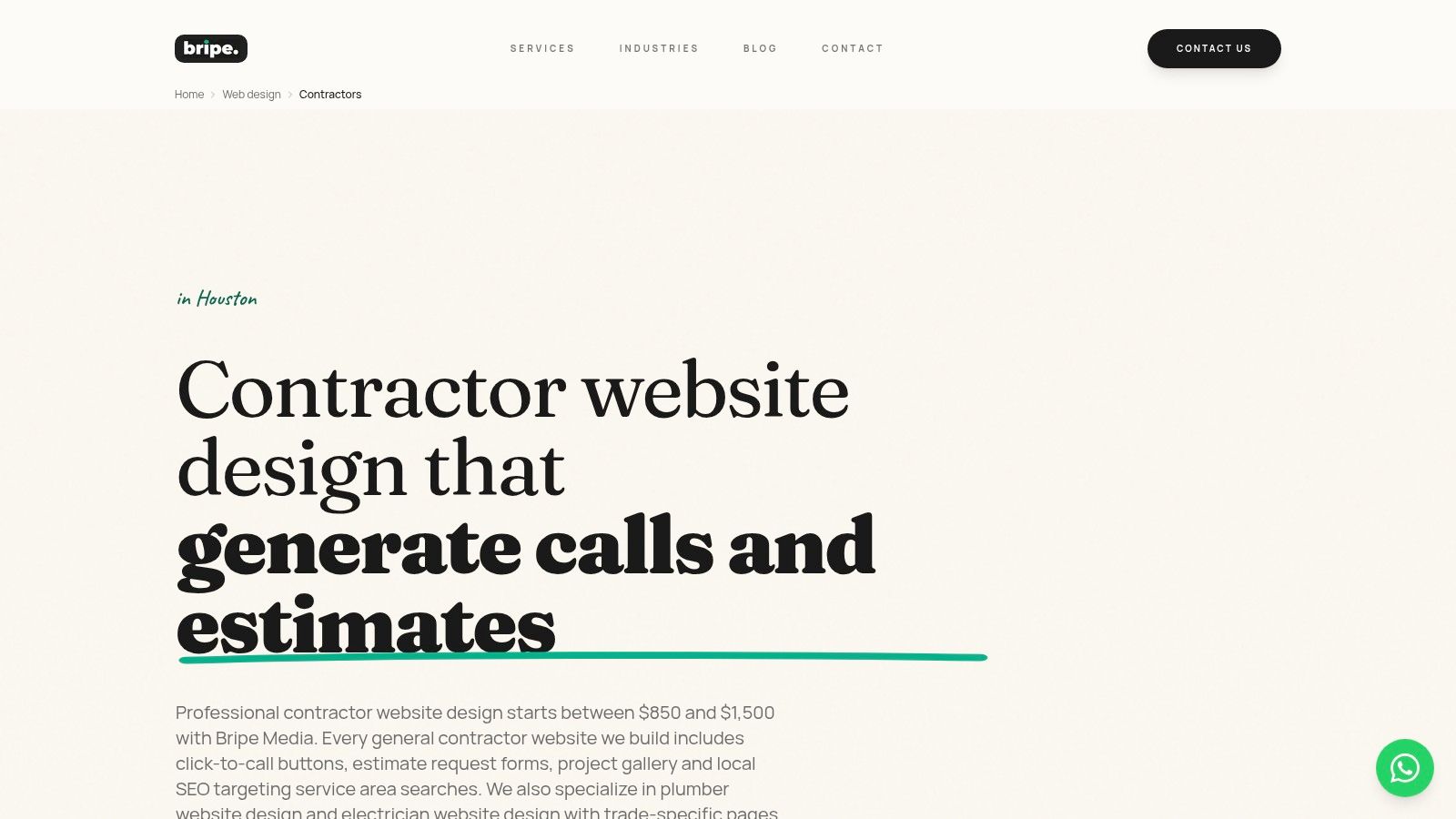
Two things stand out at Bripe Media: a published starting price with a stated 14-day delivery timeframe, and bilingual content as a built-in feature rather than an afterthought. It advertises service to contractors across the United States.
The structure covers the trust basics well. You get emergency click-to-call, prominent license and insurance details, and dedicated pages for panel upgrades, rewiring, EV chargers, and troubleshooting. Local SEO by ZIP code fits how electrical demand clusters by area, and financing information for larger jobs answers the question that stalls panel and rewire quotes. A job-photo gallery shows finished work instead of stock images of someone else's.
Confirm The Details
Bilingual content only helps if the translation is real. Confirm which languages are included, who translates, and whether both versions get the same SEO work. The shown examples aren't clearly identified as electrician-client case studies, so ask for live client sites. Also check whether hosting, maintenance, and future content changes cost extra after that fast launch.
Accessibility deserves a line in your quote request too. The W3C Web Content Accessibility Guidelines 2.1 require text alternatives for non-text content and a minimum 4.5:1 contrast ratio for normal text. That means your panel diagram needs a real text description and your service icons can't be the only label. Ask any provider how they handle it.
8. Danson Solutions
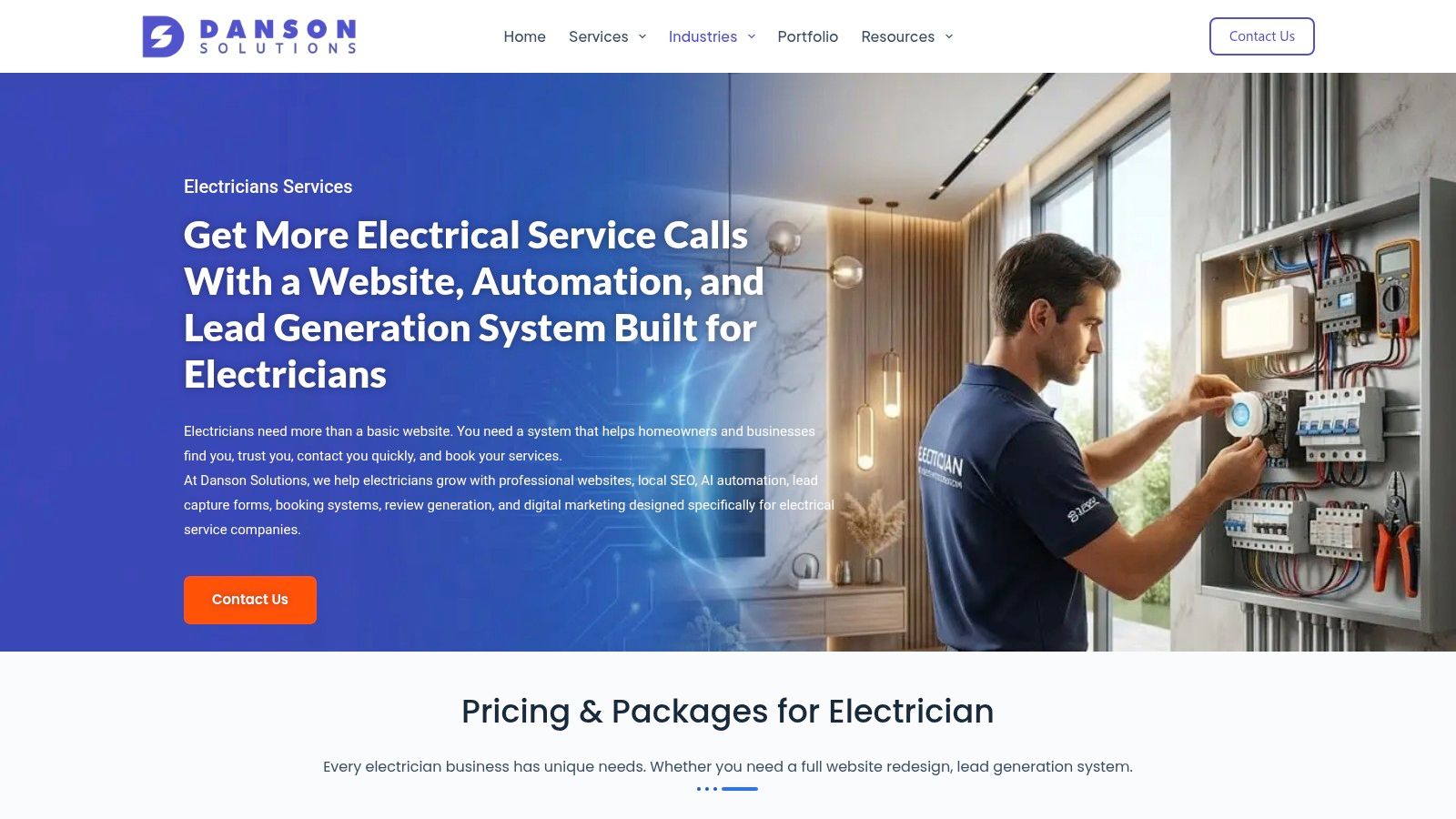
Say your website looks fine but inquiries die in an inbox nobody checks until evening. That's the problem Danson Solutions is built around. The offer pairs website modernization with AI lead automation, form handling, and email or SMS notifications, so a request submitted at noon doesn't wait until you're home.
The packages address residential and commercial electricians, emergency services, EV charger installers, and panel specialists, which is a sensible spread. A website-plus-growth package adds CRM and follow-up features, and monthly support is available. Published starting prices help with first-pass scoping.
What Starting Prices Don't Tell You
- Final cost: Starting prices mean actual projects may cost more. Get your page count and integrations priced in writing.
- Timeline and upkeep: Delivery timelines and ongoing maintenance scope aren't fully specified on the page.
- Software fees: Confirm whether AI, CRM, and communication tools carry separate subscription fees after launch.
Automation also needs measurement, or you're just answering faster without knowing what works. Many contractor websites run without analytics, so owners can't tell which forms and calls bring in work. Ask Danson, or any provider, to connect forms and calls to analytics from day one. Test the notification chain before signing too: submit the form yourself, confirm the SMS or email arrives, and ask where a Saturday night emergency request lands. Judge the system by qualified inquiries, not notifications sent.
9. W4F
W4F makes a distinction many generalist agencies miss. A homeowner with no power at 9 p.m. and a homeowner planning a renovation rewire are different buyers. One needs a phone number and proof you're licensed. The other needs scope, process, and photos. W4F structures sites for urgent repairs and planned work like panel upgrades, EV chargers, and renovations, with separate paths for each.
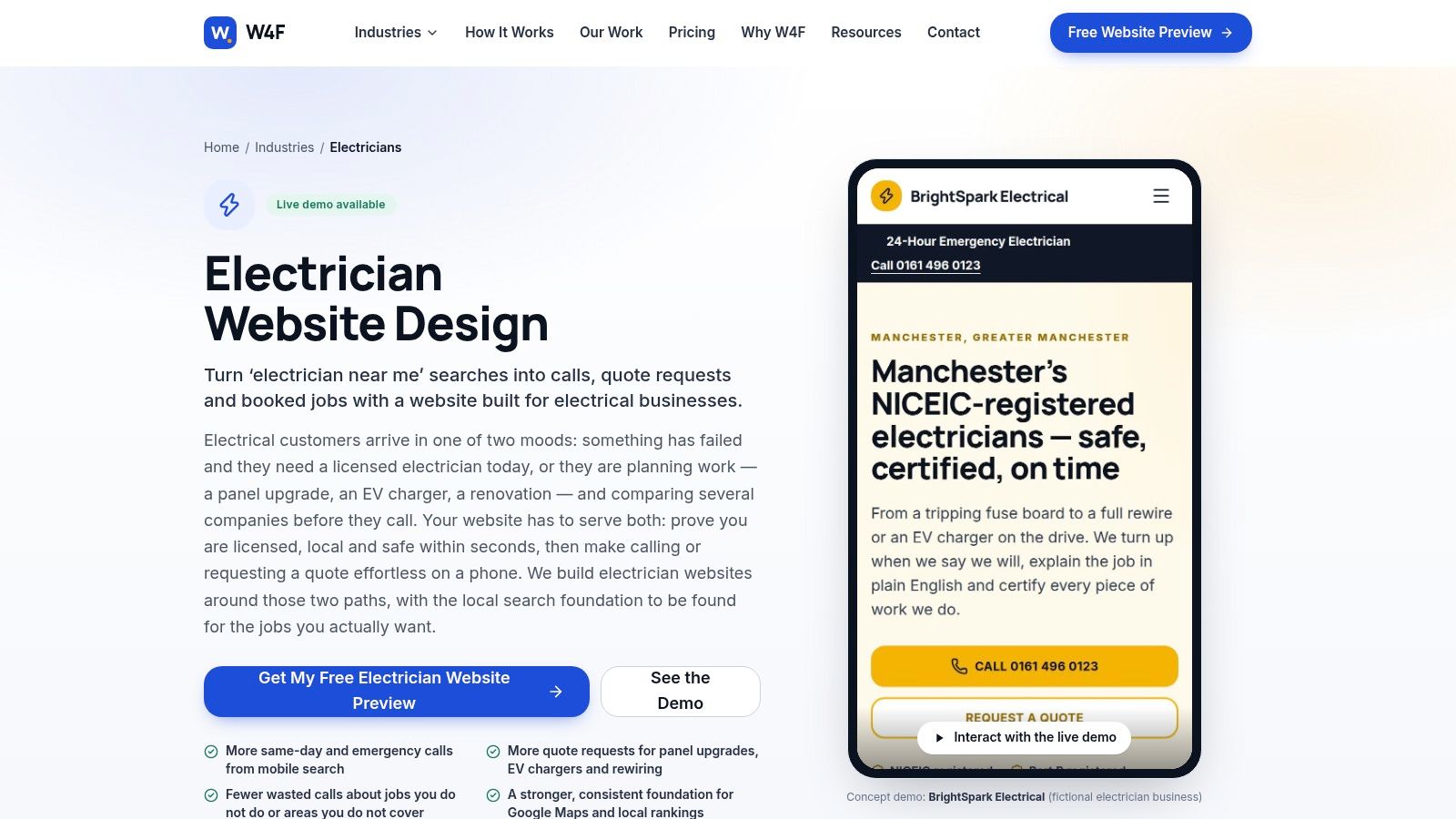
The emphasis falls on visible licensing, local relevance, and mobile contact paths, with service pages for common electrical jobs. The provider also publishes electrician-focused material on websites and local SEO. That educational content has a practical use even if you don't hire them. Read it before you take quotes from anyone, and you'll ask better questions about page structure and local targeting.
The Missing Numbers
Pricing isn't sufficiently clear on the reviewed electrician page. That's the main friction here. Request a quote that specifies page count, copywriting, hosting, and maintenance as separate lines, and confirm that search-visibility improvements are goals, not guaranteed outcomes. Any provider who guarantees rankings is selling you something they don't control.
Judge a quote by what it itemizes. A provider who won't separate build, hosting, and upkeep is asking you to sign a number you can't compare.
I recommend W4F if the emergency-versus-planned split matches your job mix and you're willing to do the quote homework. The trade-specific thinking is there. The pricing transparency, you'll have to extract.
10. Savo Group
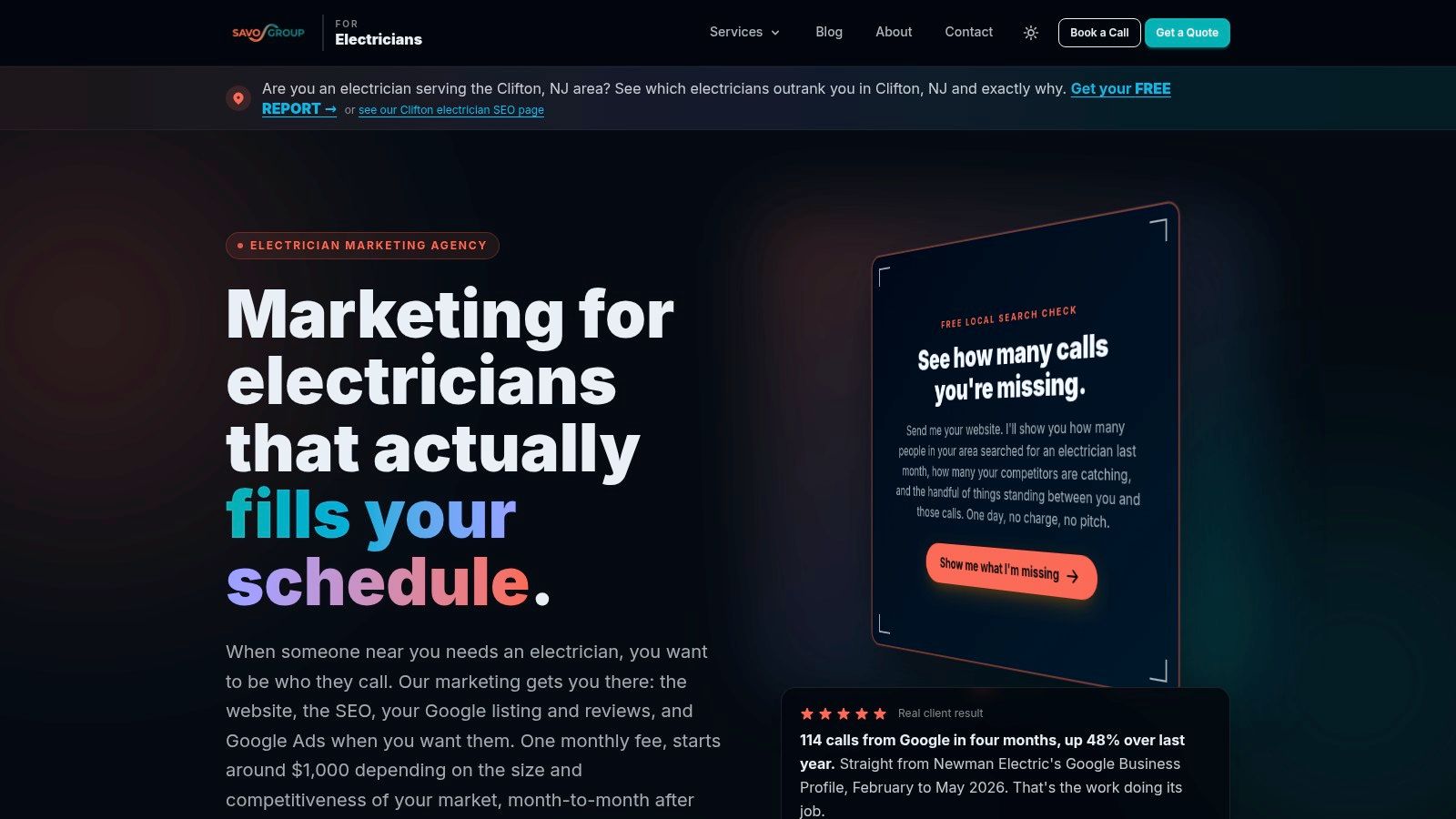
Savo Group is the broadest offer on this list. The website is one part of a program that adds local and organic search work, Google Business Profile support, review systems, and optional Google Ads management. The sites are hand-coded, according to the provider, which can mean leaner pages if the code stays disciplined.
Published pricing separates the website build from ongoing marketing, and the service fee is separated from the advertising budget. That separation is how it should work. You can see what the work costs versus what the ads cost, and judge each on its own results. Electrician-focused case-study material gives you something concrete to interrogate on a sales call.
Read The Terms First
- Commitment: The marketing program has a six-month initial term, according to the site. That's a real commitment for a small shop.
- Build cost: The website starting price is higher than several basic options in this roundup.
- Guarantee language: Review the program scope and performance-guarantee terms closely before signing. Know exactly what's guaranteed and what happens if it isn't delivered.
Search visibility work also depends on the technical layer under the copy. Per Google's structured data introduction, JSON-LD is the recommended format for structured data, and LocalBusiness markup should be validated with the Rich Results Test before deployment. Ask Savo Group, or any marketing-led provider, to show you that the markup on your site is valid and matches what's visible on the page.
I recommend Savo Group if you want one provider running the site, the visibility, and the ads, and you've got the budget and patience for a six-month program.
How the 10 electrician website providers compare on pricing, fit, lead handling, and limits
| Item | Pricing model | Best for | Lead handling | Main limitation |
|---|---|---|---|---|
| Bay Pulse Marketing | $425/month or $2,900 upfront plus monthly operating cost | Bay Area electricians seeking service-specific website pages | Tap-to-call, site-visit forms, optional missed-call texting | Bay Area focus; concept sites are not live-client results |
| Anchor Web Digital | Published fixed-price tiers; amounts not specified | Electricians wanting upfront pricing and site ownership | Mobile click-to-call and local service-area pages | Confirm coverage and page scope; no independent outcome data |
| Goliath Webs | $99/month with no upfront design fee | Houston-area electricians wanting ongoing website care | Service request form | Houston-focused page; advertising and full content marketing excluded |
| Iron Canyon Co | Published one-time starting price; amount not specified | U.S. electricians wanting a defined website scope | Click-to-call and request form | Larger sites and optional hosting or maintenance may cost more |
| JDFWebDesigns | Published monthly plans; setup fee may apply | Electricians wanting a website with lead-response and marketing tools | Missed-call text-back, AI SMS follow-up, review automation, and higher-tier CRM tools | Starter site may be restrictive; clarify setup fees and ad spend |
| Coastline Web | Monthly plans with setup fees or outright purchase; amounts not specified | Southern California electricians handling urgent calls and planned projects | Tap-to-call, text, estimate and service forms, optional CRM integrations | Regional focus; purchase excludes hosting and updates |
| Bripe Media | Published starting price; amount not specified | U.S. electricians seeking bilingual content and a stated delivery estimate | Emergency click-to-call and dedicated service pages | Confirm language, SEO, hosting, and maintenance inclusions |
| Danson Solutions | Published starting prices; amounts not specified | Electricians seeking website updates plus lead follow-up automation | Form handling, email or SMS alerts, CRM and follow-up features | Actual costs may exceed starting prices; software fees and maintenance scope need confirmation |
| W4F | Quote-based; pricing unclear | Electricians wanting trade-specific website guidance | Mobile contact paths for urgent repairs and planned work | Quote should define scope; search outcomes are not guaranteed |
| Savo Group | Website build priced separately from ongoing marketing; amounts not specified | Electricians seeking web design and visibility support | Review systems, reporting, and optional Google Ads management | Marketing program has a six-month initial term; review scope and guarantee terms |
Choosing an Electrician Website Before You Sign
Don't start by comparing prices. Start by writing down the five pages you need. For most electrical contractors that's emergency repairs, panel upgrades, EV chargers, a service-area page (or one per town that matters), and a credentials page with your license, insurance, and permit process. Add rewiring, generators, or commercial work only if you actively want those jobs. A page for a service you'd rather not sell just generates calls you have to turn down.
Then give every provider the same list and ask the same questions. How many pages does the quote include, and what does page six cost? Who writes the copy, and can you see electrician pages they've written before? Who owns the finished site and domain if you cancel? What's charged separately for hosting and maintenance after launch? A quote that can't answer those questions in writing isn't comparable yet, no matter how low the number looks.
Test The Site Like A Customer
Open the provider's demo or a live client site on your phone, away from office Wi-Fi. Time how long it takes before you can tap the phone number. Try the form and see whether a confirmation arrives. Read one service page and check whether it answers what happens next: diagnostic fees, permit handling, how long power stays off, and what can change the price. Homeowners routinely complain about unclear pricing, late arrivals, and poor status updates, as documented in the Housecall Pro customer service report. A site that answers those points upfront filters out mismatched inquiries and brings you callers who already trust your process.
Match The Model To Your Shop
Your size decides which price model fits. A solo electrician who needs a credible site and someone to keep it patched can do well with a bundled monthly service. A growing shop adding towns and services needs page depth and ownership, even if the upfront cost is higher. A contractor whose real problem is missed calls should weight text-back, CRM, and review automation over design polish. None of these is the right answer for everyone, and any provider who claims otherwise is selling, not advising.
One decision sits underneath all of them. Decide now how you'll judge the site in six months. Page views won't tell you much. Count qualified calls and form submissions per service page, and track which pages produce panel and EV charger inquiries versus low-value handyman requests. If the provider can't show you that measurement at launch, build it into the contract before you sign.
SimpleLab Digital works with small businesses in any industry, so if paid search or structured follow-up is also on your list once the website is settled, our free book-a-call option can help you decide which services to start with and which to leave for later. Bring your five-page list and your questions about ownership and hosting to whoever you talk to, us included. The contractors who get good websites aren't the ones who spend the most. They're the ones who knew exactly what they were buying before the deposit left their account.
If your electrician website needs to work alongside paid search, landing pages, and follow-up that doesn't let inquiries go cold, SimpleLab Digital offers those as modular monthly services for small businesses in any industry. Book a free call, bring your page checklist and your current quote, and we'll help you decide what to build, what to advertise, and in what order.