Marketing for immigration lawyers fails most often at the point of purchase, not production. Firms buy clicks in languages nobody can answer, publish claims nobody reviewed, and celebrate form fills that never become signed matters. I'd reverse that order. Buy only the languages, claims, and lead volume your firm can answer, screen, and document, then judge every channel by qualified consultations and signed matters.
Table of Contents
- What Immigration Clients Are Actually Looking For
- Claims That Stay Accurate Under Review
- Which Channel Does Which Job
- Languages You Can Actually Serve
- How Follow-Up Turns Inquiries Into Consultations
- What AI Answers Change and What They Do Not
- Build One System Before You Add Spend
What Immigration Clients Are Actually Looking For
In fiscal year 2024, the USCIS fiscal year 2024 annual statistical report recorded approximately 12.6 million completed applications, petitions, and requests, an increase of 17% from fiscal year 2023. That volume spans family-based petitions, employment-related filings, humanitarian applications, naturalization, work authorization, and other benefits. It isn't one market with one message. It's a set of distinct problems, each with its own search language, documents, deadline pressure, and reason to hesitate.
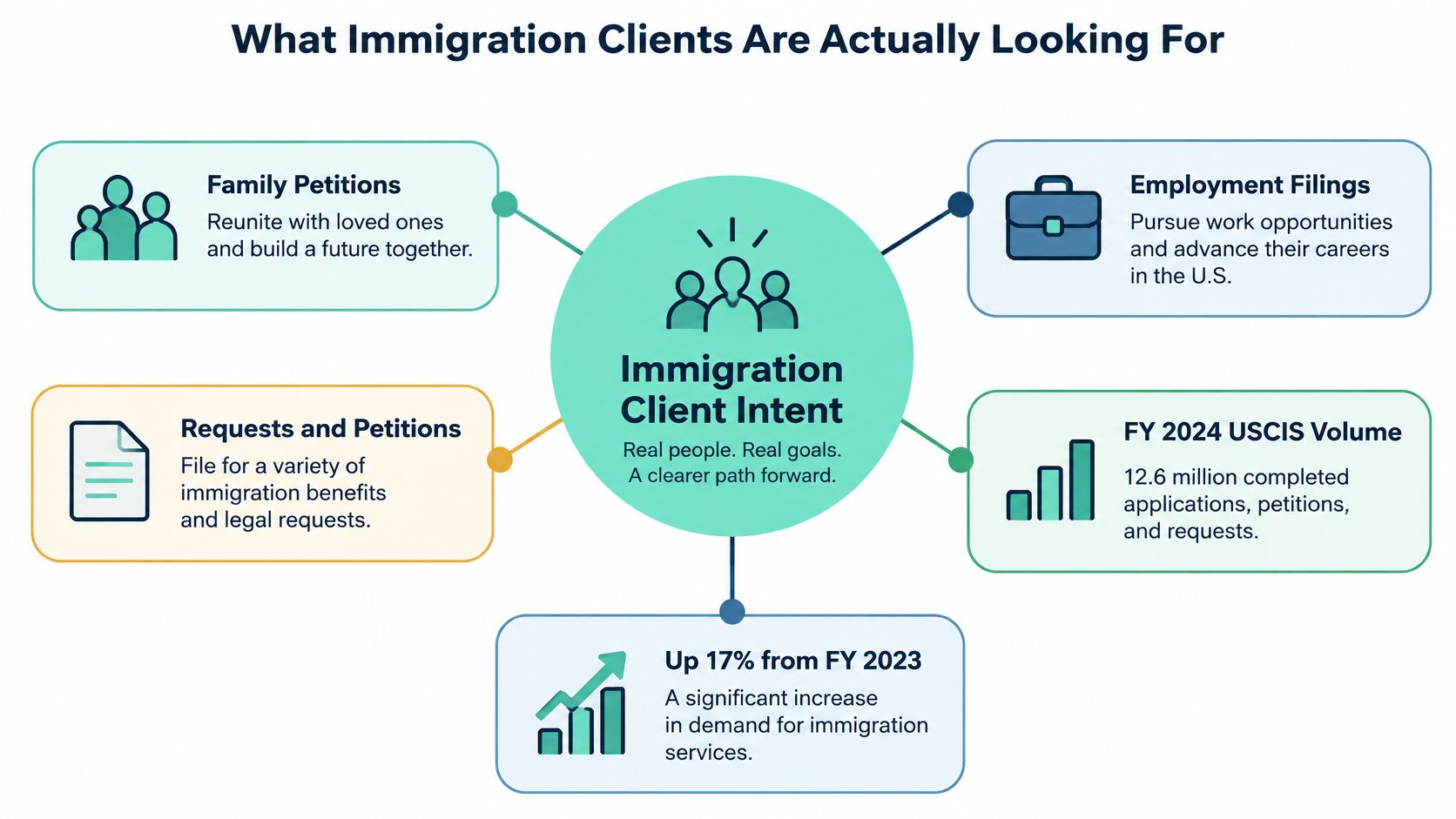
Say three people search on the same evening. A spouse wants to know which petition starts a family case and what proof of relationship looks like. A lawful permanent resident is worried about the citizenship interview and a past trip abroad. An employer needs a worker authorized without disrupting a start date. A generic headline about an immigration lawyer ready to help answers none of them well, because each person is asking whether your firm handles their specific benefit and what happens first.
Turn Each Problem Into Its Own Page
A useful page names the benefit in plain language, lists typical documents, and separates what your firm prepares from what the government decides. It explains the usual sequence from eligibility review to filing and follow up, including a possible request for evidence, without turning general information into advice for that reader. The next step is a consultation, not a promised approval. That distinction builds trust, because a careful reader knows an attorney doesn't control the adjudicator.
- Family petitions and adjustment: Focus on relationship proof, household documents, and interview preparation concerns.
- Naturalization: Focus on residence history, travel, tax and selective service questions, and interview readiness.
- Asylum and humanitarian relief: Focus on deadlines, safety in sharing facts, and why sensitive details belong in secure intake.
- Employment authorization and employer filings: Focus on category, timing, sponsorship duties, and who the firm represents.
That structure also makes search work cleaner. You can align keywords, ad copy, and landing pages to the benefit or form someone already has in mind, then route the inquiry to the right screener. A practical companion for organizing those pages is this SEO checklist for immigration lawyers, especially if your current site relies on one broad practice page.
Administrative volume can shift materially year to year, so undated guidance ages badly. Put a visible review date on process pages, assign an owner, and recheck fees, forms, and eligibility language on a set cycle. If a page can't be maintained, narrow it to what stays accurate and direct readers to a consultation for current advice.
Practical rule: Name the three matter types your firm can actually take this quarter before you fund a fourth page or campaign.
That's your starting inventory. Each matter type will need its own claim standard, channel choice, language plan, and follow up path. If you can't name who's qualified to screen it this week, it isn't a marketing priority yet, no matter how much search demand it appears to have.
Claims That Stay Accurate Under Review
The line most likely to get a campaign in trouble is guaranteed approval. It implies control over a government decision, and it creates an expectation your firm may have to unwind at the consultation. Treat every ad, page, social post, testimonial, and automated message as a regulated communication. Under the ABA comment on Model Rule 7.1, a communication must not contain a material misrepresentation or omission, create unjustified expectations, or make a comparison that can't be factually substantiated.
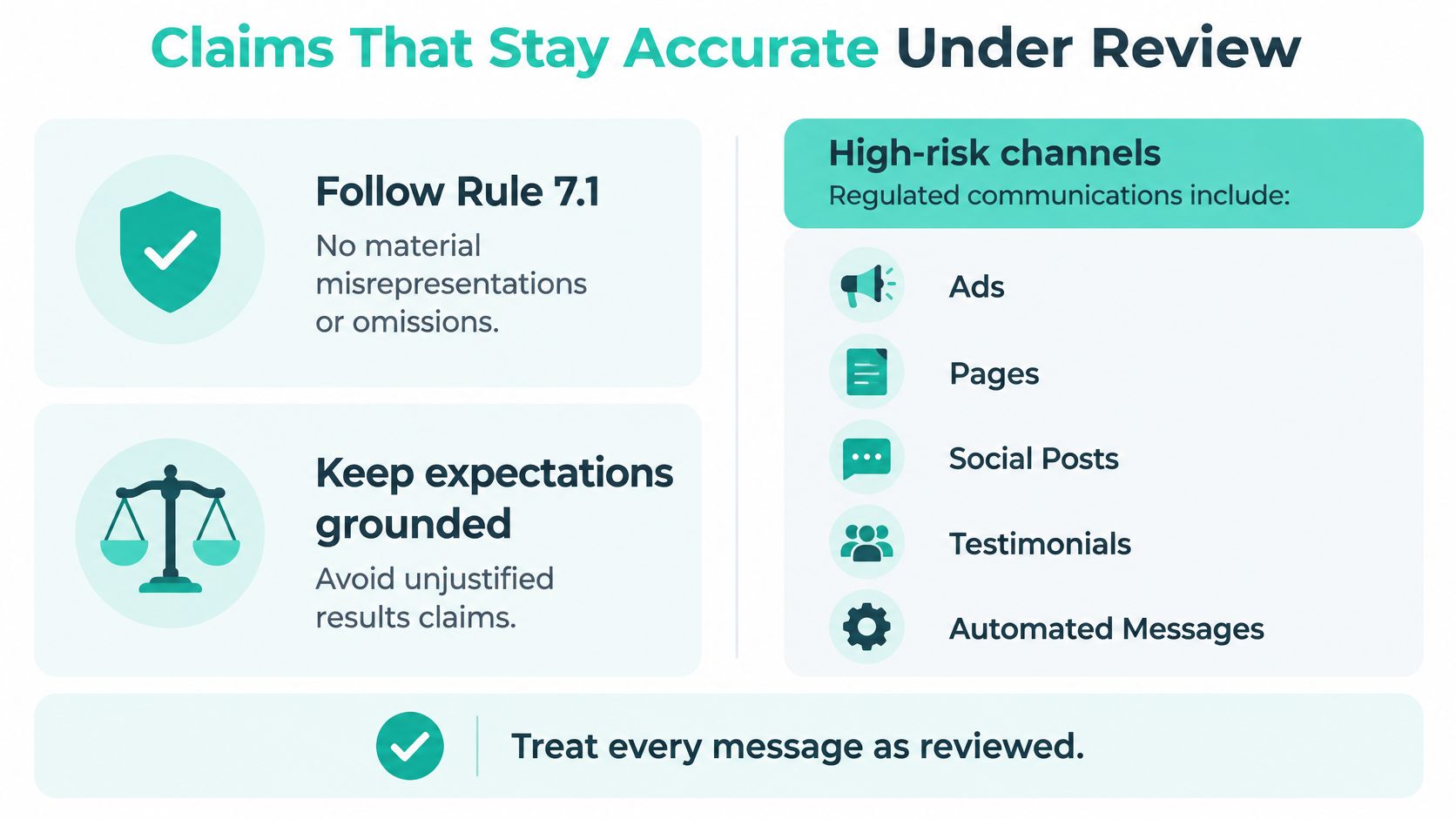
That risk doesn't disappear because a statement is technically true. A testimonial celebrating a fast approval can still suggest that speed is typical for the next viewer. A superlative about being fastest or best asks for proof you probably don't have. State rules can be stricter in application, too. The California Rules of Professional Conduct on information about legal services treat a specific fee or fee range as misleading if the lawyer charges, or intends to charge, more than the advertised amount.
Use Narrower Claims Instead
| Claim | Why it fails | Safer version |
|---|---|---|
| Guaranteed approval | Implies a result the agency controls | Name the service and say the outcome depends on facts and discretion |
| Fastest or best immigration lawyer | Ranking that is hard to prove | Describe the process and the lawyer responsible, without a superlative |
| Starting-at price as the total cost | Misleading if filing, translation, or extra work costs more | List attorney fees, government fees, and likely add-ons separately |
| Approved in 30 days testimonial | Suggests that speed is typical | Use only with limits and no implication of a usual timeline |
| We specialize, with no basis | Credential may be inaccurate | State the matter types actually handled |
| Translated line that adds a promise | Meaning drifts from the approved English | Keep English source copy and a reviewer sign-off |
Price copy deserves its own pass. Separate attorney fees, government filing fees, translation, medical or records costs where relevant, and work that may fall outside the quoted scope. A low starting figure that omits predictable charges doesn't just risk a complaint. It attracts inquiries that stall when the full total appears, which wastes consultation time for both sides.
Specialization language needs the same discipline. Don't use a credential, board claim, or specialist label unless the responsible lawyer can document the basis and the jurisdiction permits that wording. Saying the firm handles family petitions and naturalization for clients in a named area is narrower, clearer, and easier to defend than a broad expertise claim.
Document What the Prospect Saw
The ABA text for Model Rule 7.2 requires a lawyer to retain a copy or recording of each advertisement, together with a record of when and where it was used, for two years after its last dissemination, and every communication must include the name and office address of at least one lawyer or law firm responsible for its content. Build that into campaign operations. Archive the approved creative, landing page version, destination URL, publication dates, captions, lead form, confirmation page, SMS copy, and translations.
Translated copy needs an approved English source beside it. A translator shouldn't add a promise about approval, timing, or eligibility that wasn't in the original. Have a qualified reviewer sign off on meaning, not just fluency, and store that approval with the asset.
Two traps sit outside headline copy. Don't pay or give anything of value for a recommendation, and don't use a lead generator that contacts prospects for the firm without proper disclosure. Have the responsible lawyer review every referral arrangement before it goes live. Also, never let creative imply government affiliation, and don't let a notario or non lawyer preparer trade on the firm's name. A reader who thinks an ad came from an agency can miss a filing deadline while waiting for an official response that will never arrive.
If you're adapting these checks to social campaigns, this guide to bar compliant Facebook advertising for attorneys is a useful next read. I'd run one review pass across every asset before spend starts, then repeat it whenever copy, targeting, price, or translation changes.
Which Channel Does Which Job
Start with the job, not the platform logo. One channel captures urgent demand, another explains, another keeps a hesitant person engaged until they're ready to talk.
| Channel | Best job | Measure | Main risk |
|---|---|---|---|
| Google Search Ads | Capture searches for a defined benefit or form | Cost per qualified consultation and signed matter | Approval or speed promises in keywords and ads |
| Meta ads | Educate and retarget people not ready to call | Show rate after nurture | Audiences built from religion, health, or inferred hardship |
| Reach employers for employment immigration | Qualified employer inquiries | Unclear who the firm represents | |
| SEO and GEO pages | Explain a process or form with a visible date | Problem searches that become consultations | Undated eligibility claims that get misquoted |
| Email and SMS | Continue the conversation for weeks or months | Replies and booked consultations by sequence | Copy that reads as legal advice or hides that it is advertising |
| Short video | Show the steps in a language the firm can support | Inquiries that mention the video | Stories that imply the viewer gets the same result |
| Landing page | One matter type and one next step | Qualified visitors who complete the form | Sensitive facts collected before secure intake |
Paid Search Captures Existing Intent
Google Search Ads work best when someone is already searching for a named benefit, form, or consultation. Structure campaigns by matter type so budgets and landing pages stay aligned. Keep approval and speed language out of keywords, headlines, and extensions. Judge performance by cost per qualified consultation and cost per signed matter, because a cheap form from the wrong jurisdiction or case type isn't a bargain. This breakdown of Google Ads for law firms, compliance, and ROI covers that campaign discipline in more detail.
Meta has a different job. Use it for education and retargeting people who read a guide, watched a video, or started but didn't finish an inquiry. Don't build audiences from sensitive traits. Google's advertising privacy policies restrict audience selection based on sensitive information, including religious beliefs and health information, and the same restraint is a sound standard across platforms. Use service oriented context, such as interest in visa, naturalization, asylum, or family petition help, without asserting the viewer's status or hardship.
Social presence alone isn't strategy. In 2024, the ABA Practice Management TechReport found LinkedIn was used by 76% of surveyed law firms for marketing, followed by Facebook at 53%. In 2024, reporting on the ABA Legal Technology Resource Center survey found 80% of surveyed law firms maintained a social media presence. Your competitors are probably present. The advantage comes from assigning each platform a narrower job, such as LinkedIn for employer inquiries and short video for one explained step that prospects later mention at intake.
Content and Follow Up Carry the Longer Decision
SEO and GEO pages hold the dated explanations people revisit, share with family, or find through answer engines. Keep each page to one problem, name its limits, and update it visibly. Email and SMS then continue the conversation over weeks or months with document checklists, consultation reminders, and plain language process education. They shouldn't diagnose eligibility or hide that a promotional message is advertising where disclosure is required.
A connected plan works by ads creating the first opportunity, a landing page explaining the next step, content giving people more context, and follow up keeping the conversation moving. That's the wider digital marketing for lawyers model applied to immigration, and it's similar in structure to sound digital marketing for small businesses. The difference is the screening and claim discipline around each handoff, plus an immigration practice area page that names the matters and languages served instead of a generic firm pitch.
Pick one primary channel per matter type before you add a second one to fix weak intake.
Set budgets from downstream math. Divide monthly spend on a channel by the qualified consultations it booked, then compare that cost with the average value of a signed matter in the same cohort. Raise spend only when that relationship works and the firm has capacity to answer more inquiries well. Otherwise you're buying a larger backlog.
Languages You Can Actually Serve
More languages aren't automatically better. Advertise only in a language your firm can serve promptly through an attorney, trained intake staff, or a disclosed interpreter arrangement. A Spanish ad that leads to an English only voicemail and no Spanish callback doesn't expand access. It wastes spend and tells a vulnerable caller that the promise on the page wasn't real.
Language need is real, but it doesn't set your budget by itself. U.S. Census based figures cited in this immigration practice growth overview show approximately 44.9 million people speak Spanish at home, and 41% of Spanish speakers report speaking English less than “very well”, alongside 3.7 million Chinese speakers with 51% reporting limited English, 1.6 million Vietnamese speakers with 57%, and 1.2 million Korean speakers with 49%. Those figures justify planning for access. Your staffing roster decides which language gets funded first.
| Language at home | Approximate speakers | English less than very well | Advertise only if |
|---|---|---|---|
| Spanish | 44.9 million | 41% | Attorney, trained intake, or a disclosed interpreter can respond promptly |
| Chinese | 3.7 million | 51% | Same staffing test plus review in the written language used |
| Vietnamese | 1.6 million | 57% | Same staffing test |
| Korean | 1.2 million | 49% | Same staffing test |
Run the Staffing Test First
Use this order before any translation invoice gets approved.
- List languages you can answer this week: Name the person or interpreter process for phone, form, and consultation.
- Match each language to a matter type: Don't translate the whole site if you only staff family petitions in that language.
- Build one landing page and one ad set per language: Keep the offer, screener, and reporting separate from English campaigns.
- Keep approved English copy beside the translation: Record who reviewed meaning and when.
- Report by language: Track qualified consultations, show rate, signed matters, cost per retained case, and interpreter cost.
A language specific page belongs with your immigration practice content, written for that reader's matter and questions. It shouldn't be a mechanical duplicate of a generic homepage. Explain who will speak with the caller, whether an interpreter is used, and which parts of the process can be handled in that language. If written Chinese is offered, confirm which written form your reviewer approved and use it consistently across ads, pages, and confirmations.
Measurement is where many multilingual campaigns go soft. Clicks and form fills can rise while show rates fall because callbacks happen in the wrong language or too late. Separate reporting exposes that quickly. You may find a smaller language campaign produces fewer inquiries but a better cost per retained case once interpreter time is included. You may also find strong demand you can't serve yet, which is a hiring or interpreter decision, not a reason to increase ad spend.
If nobody can take the call promptly in that language, don't buy the traffic.
I'd fund one language that passes the staffing test, prove it through signed matters, then expand. That pace protects prospects and gives you clean evidence about where the next intake hire or interpreter budget should go.
How Follow-Up Turns Inquiries Into Consultations
Speed is a conversion issue before it's a service nicety. In 2024, Clio's client intake study reached only 52% of the 500 law firms contacted by phone, and only 40% answered when called. An immigration inquiry that waits overnight often calls the next firm, especially when a deadline, work start date, or travel plan is pressing. Your ad can do its job perfectly and still lose the matter at the phone.

Assign a named person to first response during business hours and a clear backup. The goal of the first contact isn't to solve eligibility by text. It's to respond in the inquiry language, confirm the matter type, screen for basic fit, and book the consultation before the conversation ends. Detailed facts belong in secure intake, where access and retention are controlled.
| Step | Field to record | Why it matters |
|---|---|---|
| 1. Answer or call back the same day | Time of first contact and inquiry language | Shows speed and language capacity |
| 2. Record the source | Source, campaign, and landing page | Lets ads learn from real matters |
| 3. Screen for fit | Matter type, status sought, deadline, prior denials, location | Filters out matters the firm cannot take |
| 4. Move eligibility to secure intake | Secure intake link sent, no case facts in the ad form | Keeps sensitive facts out of ad platforms |
| 5. Book before the call ends | Consultation date and attendance | Tracks show rate |
| 6. Send confirmation | Firm name, no case-specific advice in the message | Keeps messages compliant |
| 7. Follow up by plain-language sequence | Sequence step and reply | Measures booked consultations by sequence |
| 8. Mark outcome | Attended, fit, ability to pay, signed engagement | Feeds real results back to ads |
Screen Lightly, Then Record the Outcome
At screening, collect matter type, target benefit or status, deadline urgency, prior filings or denials, location, language preference, and whether the person wants legal advice or document help. Don't ask for unnecessary sensitive history in an ad form. Once fit looks plausible, send the secure intake link and book the appointment. The confirmation should identify the firm, state time and location or call details, and avoid case specific advice.
If the person doesn't book, use a plain language email or SMS sequence over the following weeks. Keep it identified as advertising where required, make opting out easy, and educate around process and preparation rather than predicting an outcome. This guide to SMS follow up for law firm leads helps structure that cadence without turning every message into a hard sell.
The reporting loop matters as much as the callback. Mark consultation attendance, legal issue fit, jurisdiction, ability to pay, signed engagement, and collected revenue. Send screened outcomes back as offline conversions where your systems allow it, so bidding learns from matters you can accept instead of incomplete forms or low intent calls. A useful discussion of that downstream setup appears in this law firm Google Ads conversion tracking case study.
Report by cohort, such as family based adjustment, naturalization, asylum, or employment immigration. Cost per lead can hide a campaign full of unusable inquiries. Cost per qualified consultation and cost per signed matter show whether marketing, screening, and follow up are working together. If intake can't say which leads were usable, fix that field before testing new creative.
What AI Answers Change and What They Do Not
People are asking AI legal questions, but the evidence for immigration practices is still directional. One 2025 legal trends finding cited in this immigration law marketing overview reported that 14% of U.S. consumers had used AI to answer a legal question, while another 43% said they would consider doing so, and a separate 2026 survey reported that 50.1% would use at least one AI answer engine to research an attorney. That second survey came from a legal marketing company, so I'd treat it as a signal to monitor, not proof of retained case value.
This desk setup is a useful reminder that AI output still needs attorney review beside the source documents.

Publishing FAQs doesn't tell you whether an AI mention produced a qualified immigration consultation. It also doesn't control how a system compresses your page. In immigration, a wrong summary about a deadline, asylum eligibility, removal defense, or government affiliation can cause serious harm. That risk calls for answer governance, not a rush to produce more generic content.
Govern the Answer, Then Measure the Inquiry
Publish sourced, date stamped explanations that name jurisdiction and case type limits near the top. Put the attorney review note and consultation boundary where the answer starts, not buried at the bottom. Periodically check recurring AI answers for factual errors about your firm and core topics. If a summary is wrong, correct the underlying page, tighten the wording, and update the date instead of adding adjectives about expertise.
It also helps to understand how AI systems recommend law firms, because consistent firm facts, credible third party mentions, and clear practice scope give those systems better material to cite. For the owned side of that work, see this guide to generative engine optimization for law firms.
Consider a naturalization timing question. A governed page states the general rule, names common exceptions, shows its review date, and invites a consultation to apply the rule to travel and residence facts. A weaker page says approvals are fast and pushes a form. The first page can be quoted more safely and sets a better consultation. The second creates an expectation your staff must correct.
The short video below is useful context for how answer engines present legal information and why source clarity matters.
Track branded searches, referral paths, consultation quality, and signed matters before calling AI visibility a channel. Don't let an AI mention replace search ads for people ready to hire, and don't let content production replace the same day callback. AI can widen discovery. Your verified pages and intake process still decide whether discovery becomes a safe consultation.
Build One System Before You Add Spend
Pause new spend until four pieces exist for one matter type. First, a landing page with a dated explanation of the benefit, typical documents, what the government decides, and one next step, a consultation. Second, a claim set that passes the safer version standard and can be archived with its destination URL. Third, a language your firm can answer the same day, with approved English copy beside any translation. Fourth, a named person who calls back the same day and marks qualified inquiries and signed matters.
If any piece is missing, fix it before adding a second channel. If all four exist, connect the channels so you can see cost per qualified consultation instead of a pile of forms. A vendor can't invent intake your firm won't staff. The decision is whether to fund the one matter type you can answer this month or wait until you can.
For firms that want that connection handled monthly, SimpleLab Digital offers immigration among its practice areas alongside family, employment, and others, with packages from $990 per month in USD and advertising spend billed separately. After subscribing, a Marketing Guru arranges a 30 to 60 minute onboarding call to match services to goals, budget, and what's already running, and agreed work is prepared in about 7 to 10 business days. You can compare scope through the law firm package comparison and the immigration practice area page before booking a call.
If your firm can name one immigration matter, one language, and one person ready for same day follow up, we can help you connect compliant ads, focused landing pages, content, and follow up around qualified consultations instead of raw inquiries. Visit SimpleLab Digital to book a call and get recommendations matched to your goals, budget, and current marketing.